Dive Brief:
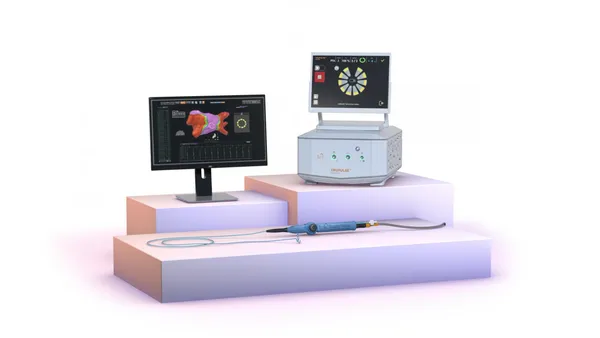
- AtriCure, whose devices are used to treat atrial fibrillation and related conditions, said Thursday the first procedures were performed in patients with its new dual energy platform.
- The system integrates pulsed field ablation with a radiofrequency ablation approach using the company’s cardiac clamp technology. Surgeons can use either method independently or in combination.
- The platform is not yet approved for use in any market. AtriCure said it expects to initiate a clinical trial in the coming year.
Dive Insight:
AtriCure is developing the dual energy platform with the goals of shortening surgical ablation times and introducing PFA as a complementary energy source.
PFA has disrupted the cardiac ablation market, fueling strong sales for companies like Boston Scientific and Medtronic. PFA is growing in popularity because the approach has been found to reduce the risk of damage to surrounding tissue and shorten procedure times compared with traditional ablation techniques. PFA uses energy pulses to create pores in the cardiac tissue to interrupt the abnormal electrical signals that cause irregular heartbeats such as AFib.
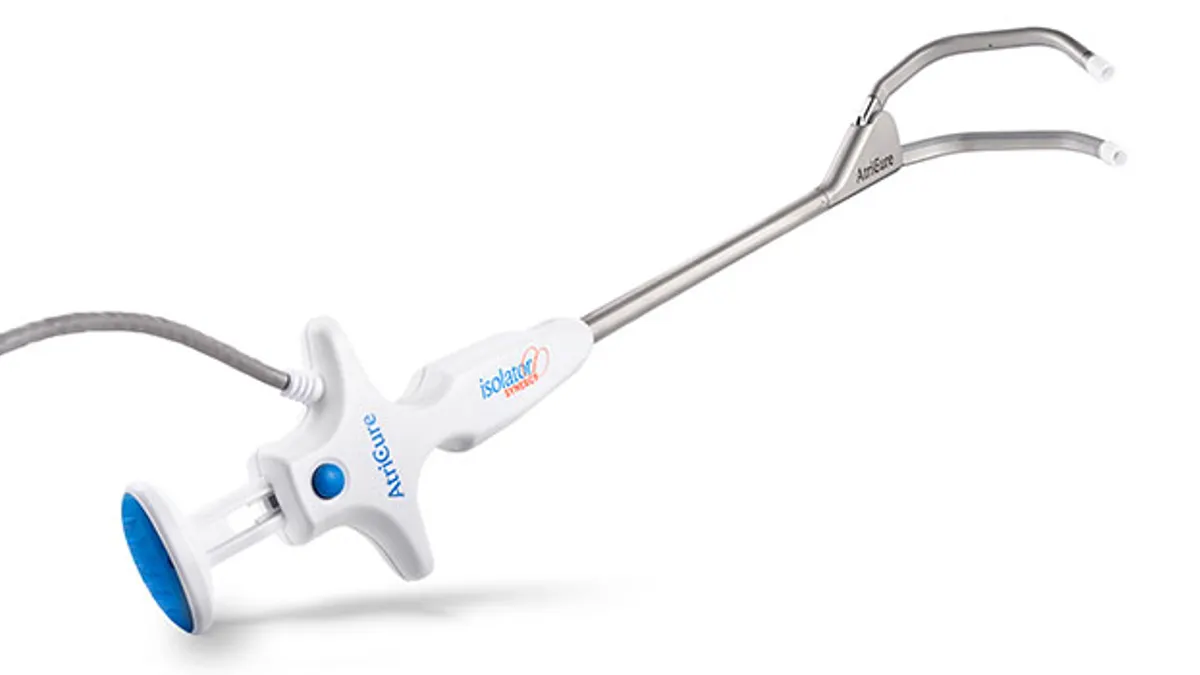
AtriCure’s EnCompass Clamp, launched in the U.S. in 2022, ablates the heart with radiofrequency energy in open-chest cardiac surgeries. The device allows the surgeon to create lesions around the pulmonary veins and posterior wall of the left atrium without opening the atrium.
The company credited expanding adoption of the clamp, which also recently launched in Europe, with helping generate overall revenue growth of nearly 16% year over year in the third quarter.
CEO Mike Carrel, on an October earnings call, said AtriCure expects the development of an EnCompass Clamp enabled with PFA to drive further growth in concomitant procedures, in which ablation is performed during another cardiac surgery. Demand for the EnCompass device is coming from surgeons who specialize in coronary artery bypass graft, or CABG, surgery to treat blocked arteries, he said.
“We're still severely underpenetrated in the CABG market,” said Carrel. “We're maybe … approaching 10% of the CABG patients that have AFib are getting treated.”
Atricure said that for the first two patients treated with its dual energy platform, total procedural ablation time to create a “box lesion” simultaneously isolating the pulmonary veins and the left atrial posterior wall was less than 60 seconds.
The procedures were performed at Victorian Heart Hospital in Australia.