Intuitive Surgical executives said this week that general surgery, particularly in after-hours care, drove procedure growth for the da Vinci robotic platform. U.S. procedures increased 15% in the fourth quarter compared with a year ago.
After-hours procedures such as gallbladder removal and appendectomy using a da Vinci robot grew 35% in the fourth quarter, CFO Jamie Samath said in a presentation at the J.P. Morgan Healthcare Conference.
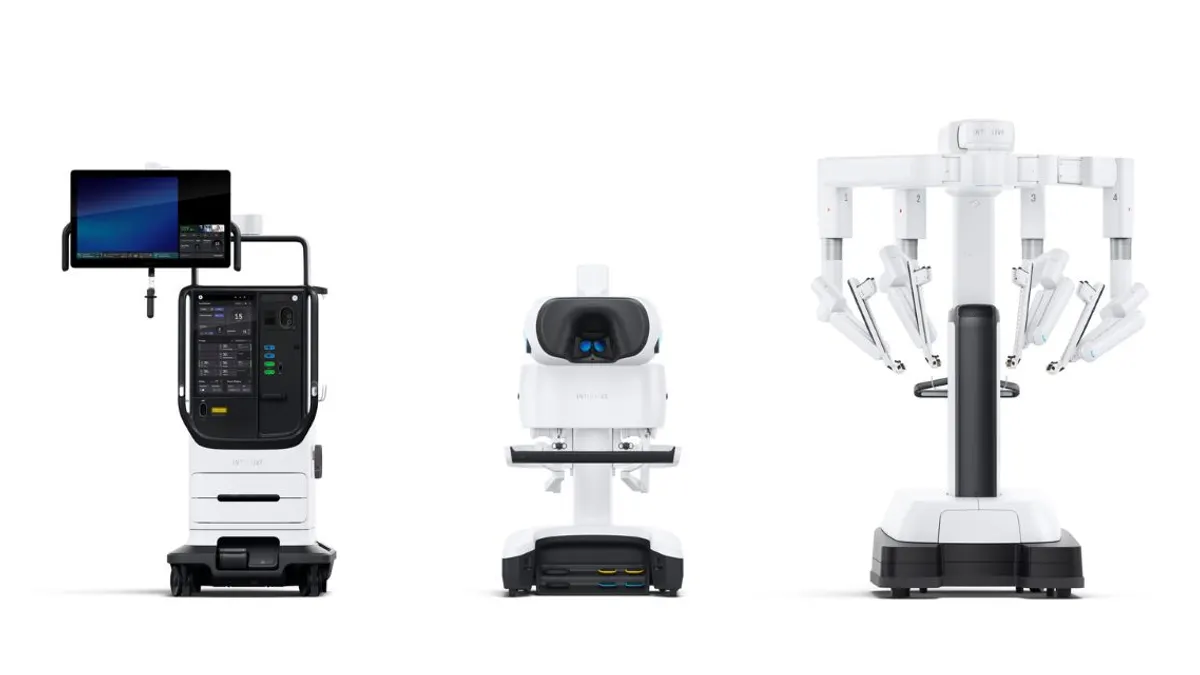
Intuitive has been ramping up the launch of its latest system, da Vinci 5, making it broadly available in the U.S. in the third quarter of 2025. Da Vinci 5 is also cleared in Korea, Japan and Europe.
The strong launch has exceeded the company’s expectations, with about 1,200 da Vinci 5 systems installed and 270,000 procedures performed globally, CEO Dave Rosa said at the conference.
In the U.S. alone, utilization is 11% higher with da Vinci 5 than with Intuitive’s earlier-generation da Vinci Xi system, Rosa said.
“That's really supporting the design intent,” he said. “A portion of what we tried to do with da Vinci 5 was build in more surgeon autonomy, more efficiency, so that it would lead to higher utilization. We see that happening.”
When health systems consider adding or expanding robotic programs, said Rosa, they look not only at a robot’s capabilities, but factors affecting procedure economics such as the training and support infrastructure surrounding the platform. “And as they evaluate their programs, we see them continue to choose da Vinci 5 and Intuitive as a whole,” he said.
Intuitive has been adding additional features to the robot since da Vinci 5’s limited launch began in March 2024, the CEO said. Those include a gauge to measure force applied to tissue, a curved vessel sealer that has received positive feedback and 3D models that can be imported into the surgeon console and manipulated in real time. The company is also working on molecular imaging capabilities and a wristed clip applier instrument for the robot.
Competitive challenges
Rosa addressed a question on how Intuitive, the soft tissue robotic surgery leader with a decades-plus head start, plans to stay ahead as new competitors come to market. The company faces competition in the U.S. this year from Medtronic, which received its first Food and Drug Administration clearance in December for the Hugo robotic system with a urology indication.
Medtronic is also pursuing indications for general surgery and gynecology. Johnson & Johnson is not far behind, after submitting its Ottava soft tissue system to the FDA earlier this month for de novo classification in general surgery.
As customers consider the “entirety of the ecosystem” supporting a robotic program, “I like our chances,” Rosa said. Looking forward, he added, Intuitive has thousands of engineers and heavy R&D investment that will continue to advance its systems.
For 2026, Intuitive forecast worldwide procedure growth of 13% to 15% using da Vinci systems, compared with an 18% increase in 2025.
“In the U.S., we expect the growth drivers in 2026 to be similar to those in 2025, led by general surgery and acute care,” Rosa said. The outlook also takes into account the potential impact of changes to Affordable Care Act premium subsidies and Medicaid funding on hospitals and patients, the CEO said.