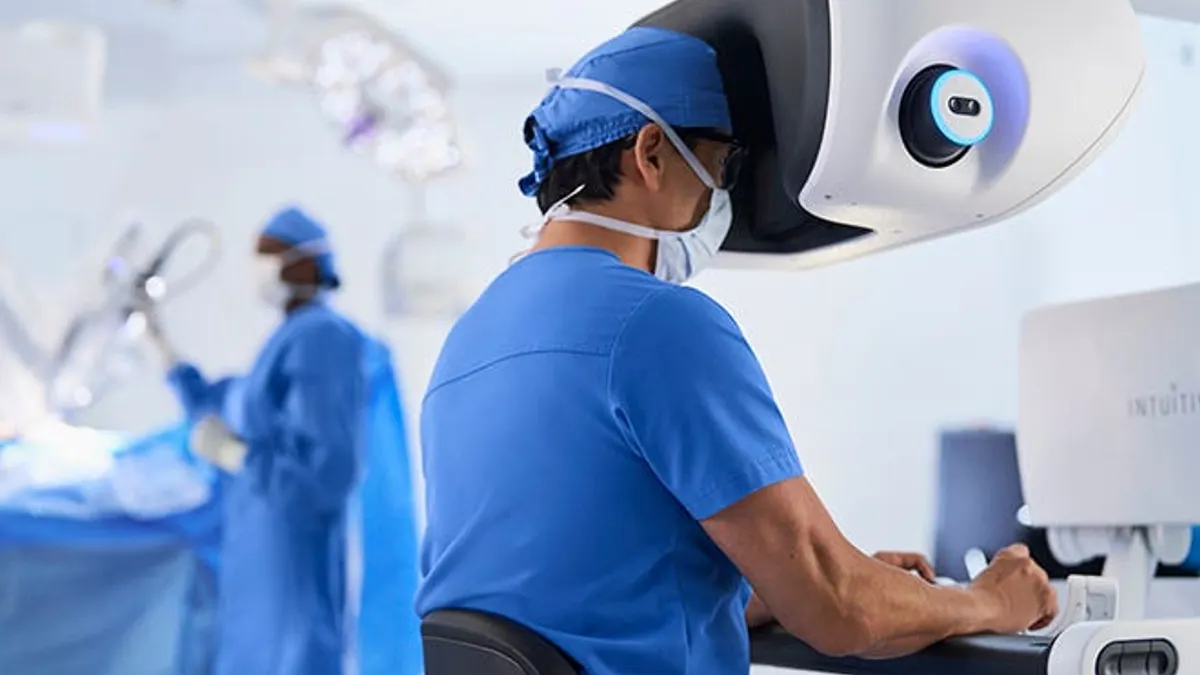
Intuitive Surgical is laying the groundwork to expand use of its da Vinci robots in cardiac surgery and ambulatory surgery centers, two potentially large markets for the company.
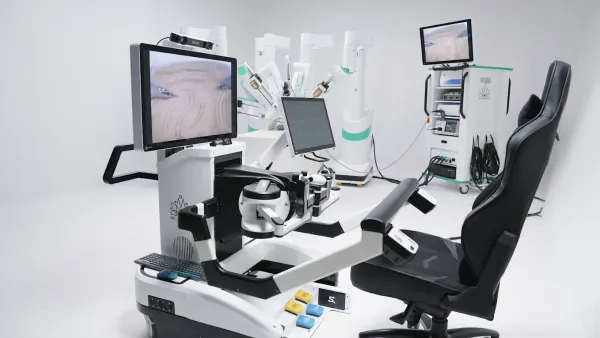
The Food and Drug Administration this month cleared several cardiac procedures on the da Vinci 5 robot, paving the way for expansion in the specialty, CEO Dave Rosa said Thursday on an earnings call.
“We believe deeply that patients requiring cardiac surgery can benefit from a minimally invasive approach with da Vinci and look forward to actively supporting our customers through these procedures,” Rosa said.
Due to the complexity of cardiac surgery, Intuitive plans a “measured rollout” to support training and adoption, he said.
The regulatory clearance covers instruments without force feedback, a technology that allows surgeons to sense force exerted on tissue. Intuitive will work to add force feedback in time and is also developing cardiac-specific instrumentation, Rosa said.
Outside the U.S., da Vinci 5 has a cardiac clearance in Korea, and Intuitive is pursuing cardiac approvals in Europe and other geographies, some with force feedback instruments.
The cardiac indication further differentiates Intuitive’s platforms from other robots coming to market this year from Medtronic and Johnson & Johnson, Truist Securities analyst Richard Newitter told clients in a note. Medtronic’s Hugo soft tissue system gained FDA clearance in December with an initial indication in urology, while J&J earlier this month said it filed an FDA submission for its Ottava robot in general surgery.
ASC growth
In addition to the fresh focus on cardiac surgery, Intuitive said it is prioritizing expansion in ASCs, where its hospital customers are shifting more surgeries.
CFO Jamie Samath said the expansion into ASCs will be a multiyear effort.
The initiative currently focuses on higher-volume centers and involves refurbished versions of an earlier-model da Vinci system, said Samath, adding that many of those ASCs are affiliated with existing customers where surgeons are already trained on the robot.
ASC leaders are looking for “repeatable, high-quality clinical outcomes,” said Rosa, noting the economic structure must work for the reimbursement levels of the particular center. Typical procedures are gallbladder removal, hernia repairs and benign gynecology surgeries, the CEO said.
Truist’s Newitter said Intuitive is refurbishing da Vinci Xi systems that customers trade in when they upgrade to the newer da Vinci 5 robot. “The refurbished XiR platform should help garner deeper robotic surgery adoption in ASCs,” said Newitter.
Further, he wrote, “management noted that XiR is priced for sites of care where reimbursement is tighter and case complexity is lower, which is most relevant for ASCs and [outside U.S.] geographies.”
Strong 2025 procedures
Intuitive reported earnings in line with preliminary fourth-quarter and full-year results released last week. Increasing adoption of the da Vinci 5 system and strength in general surgery helped fuel a rise in worldwide da Vinci procedures of about 18% in 2025, compared with the prior year.
Intuitive provided a 2026 worldwide da Vinci procedure growth forecast of about 13% to 15%, reflecting potential impacts from changes to Affordable Care Act premium subsidies and Medicaid funding, capital challenges in Europe and Japan, and competition in China.