AdvaMed CEO Scott Whitaker said on Monday that the U.S. must tailor a tariff policy to ensure that medical technologies remain anchored in trusted supply networks, or risk unintended consequences that could affect healthcare providers and patients.
Technologies such as implantable heart devices, imaging systems and artificial intelligence-enabled diagnostics can contain thousands of rigorously validated components and must meet stringent U.S. and global regulatory requirements, Whitaker said in a LinkedIn post.
Because of the complexity and precision involved in medtech manufacturing, changing a supplier can take years and require substantial investment.
“Hospitals, operating under multi-year purchasing contracts and fixed reimbursement structures, cannot easily absorb sudden cost spikes,” Whitaker said.
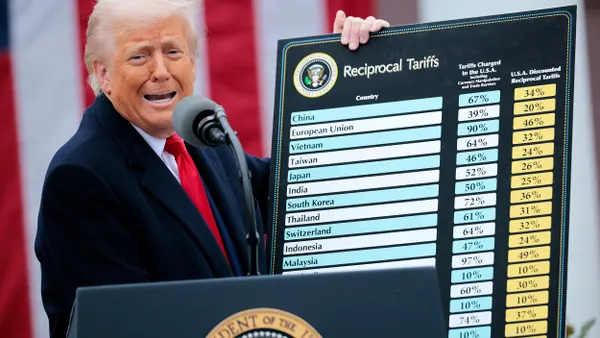
Whitaker’s comments follow the Supreme Court’s decision last week striking down President Donald Trump’s broad use of tariffs under the International Emergency Economic Powers Act and subsequent move to apply a 10% surcharge to U.S. imports under Section 122. Trump also signaled he would raise the rate to 15%.
The AdvaMed CEO said the U.S. medtech industry stands ready to work with the president to strengthen domestic manufacturing and ensure American dominance in critical industries, noting that 70% of medtech products used in the U.S. are made here. More than $340 billion has been invested in U.S.-based manufacturing and research in the sector since 2017, he said.
“We can advance the President’s goal of addressing trade imbalances by addressing unfair foreign practices and non-tariff barriers in our sector — instead of applying broad measures that risk disadvantaging a net-exporting American industry such as ours,” Whitaker wrote.
Section 232 investigation
The Trump administration can support American manufacturing by reducing tariffs on critical inputs and trade with trusted allies and security partners, lowering production costs and unlocking further domestic investment, Whitaker said.
“With thoughtful leadership, we can lower unnecessary cost burdens, confront unfair trade practices abroad, and accelerate domestic investment,” he said.
The administration has the policy tools to strengthen national security and global competitiveness in the medtech sector, Whitaker said, citing the Section 232 process as an example.
The Supreme Court ruling does not affect tariffs enacted under Section 232 and other authorities available to the president. The Trump administration opened a Section 232 national security investigation into medical equipment in September.
Because it is sector-specific and evidence-based, the Section 232 process “allows policymakers to examine supply chains in detail, identify genuine vulnerabilities, and tailor remedies accordingly,” Whitaker wrote.
“Whether we agree or disagree on the use of tariffs to meet these goals, the President has been clear that he intends to use these tools broadly,” Whitaker said, “and we must ensure that the uniqueness of this industry is front of mind as policy decisions are developed.”