Boston Scientific’s planned $14.5 billion acquisition of Penumbra started off the year with a bang. The two fast-growing, cardiovascular companies complement each other, with Boston Scientific seeing an opportunity to enter new markets, and Penumbra expecting its devices to gain a wider global reach.
Boston Scientific CEO Mike Mahoney explained how they reached a deal, saying there are few companies that can accelerate Boston Scientific’s growth, earnings per share and operating income margins.
“You have basically two companies that are strong independently, and in the combination have the potential to even become much stronger,” Mahoney said on a Thursday investor call.
The acquisition is expected to close in 2026, more likely in the second half of the year, Mahoney said. Boston Scientific will pay $374 per share, funding the acquisition with about $11 billion in cash and the remainder in stock.
Here are three takeaways from the deal:
1. Penumbra is expected to expand Boston Scientific’s presence in a fast-growing market
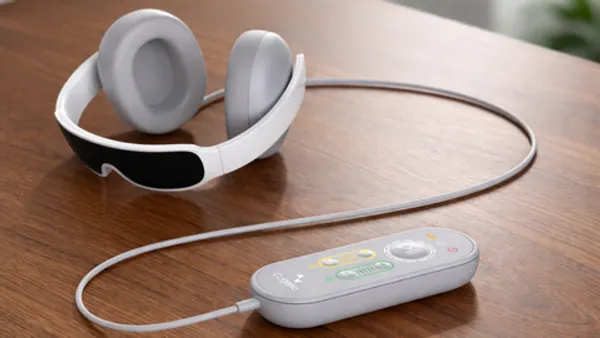
Penumbra makes thrombectomy devices to remove clots from blood vessels. It also makes embolization devices to stop blood flow and control bleeding. Mahoney said the acquisition could help Boston Scientific enter new, high-growth segments such as neurovascular and mechanical thrombectomy.
Boston Scientific previously had a neurovascular business, but the company sold it to Stryker in 2011.
“We’ve really been looking for a long time on how to become a scaled, market-leading neurovascular company, not one that’s coming from a distance behind the pack and trying to roll up a bunch of companies,” Mahoney said.
Last year, Boston Scientific also acquired Silk Road Medical, which makes minimally invasive products to prevent stroke in patients with carotid artery disease.
Mahoney added that while Boston Scientific sells some products to vascular surgeons, such as Silk Road’s systems, Penumbra works more closely with those physicians, and an acquisition could help with those relationships.
J.P. Morgan analyst Robbie Marcus wrote in a research note that Boston Scientific’s drug eluting stents, drug coated balloons and transcarotid artery revascularization systems could benefit from working more closely with vascular surgeons. At the same time, the analyst thinks Penumbra can benefit from Boston Scientific accelerating its access to international markets.
2. Little product overlap
Boston Scientific is “the most logical acquirer” for Penumbra, Needham analyst Mike Matson wrote in a research note. Penumbra’s products are complementary to Boston Scientific’s cardiology and peripheral intervention businesses, Matson added, with only modest overlap between the companies’ devices.
Because of this, Matson does not expect the deal to run into antitrust issues. He also does not expect Penumbra to receive higher bids from other firms that might face more regulatory hurdles to a deal. Johnson & Johnson, Medtronic and Terumo, for example, all have existing neurovascular businesses.
If the deal falls through, Penumbra would be responsible for paying a break-up fee of $525 million if it enters an agreement for a better proposal or the board changes its recommendation for shareholders to adopt the merger agreement, according to a securities filing.
Boston Scientific would be responsible for a $900 million termination fee if the companies are unable to get the needed regulatory approvals or clearances, but have met the other needed conditions, including shareholder approval.
3. Boston Scientific plans to keep Penumbra as a standalone company and maintain its culture
Mahoney said his number one goal for the acquisition is to keep employees engaged. He said both companies’ cultures are aligned with a focus on innovation and clinical evidence.
“I think you see with Boston Scientific, we have a very highly engaged global workforce,” Mahoney said. “We develop our employees. We have a culture that lets them speak their mind. We care about employees, and that very much matches with Penumbra.”
Two years after the acquisition closes, he expects to retain and grow the commercial workforce and provide additional resources to support Penumbra as needed.
To allow Penumbra the flexibility and speed it needs, Boston Scientific also plans to keep the company as a standalone entity within its cardiovascular group.
Stifel analyst Rick Wise said in a research note that Penumbra works in markets that are “high-growth but also highly competitive,” and that Boston Scientific emphasized protecting Penumbra’s “rapid innovation culture and top-class commercial team.”
As a further show of support for the deal, Penumbra CEO Adam Elsesser said he would take Boston Scientific stock for all of his Penumbra shares, and would be on the combined company’s board of directors.