Dive Brief:
- Cognito Therapeutics has raised $105 million to fund the authorization and commercialization of a medical device to treat Alzheimer’s disease, the company said Thursday.
- Called Spectris, the investigational device delivers light and sound, triggering biological effects that research suggests could preserve cognition and daily function in people with Alzheimer’s.
- A small clinical trial did not demonstrate a reduction in amyloid plaques, but preliminary evidence showed a reduction of cognitive and functional decline and brain atrophy after six months of treatment. Cognito is running a larger study and aims to launch the device next year.
Dive Insight:
Gamma oscillations, brain activity needed for sensory processing, cognition and memory consolidation, are disrupted in Alzheimer’s. Research in mice suggests evoking the oscillations with light and sound can counter neurodegeneration and improve learning and memory.
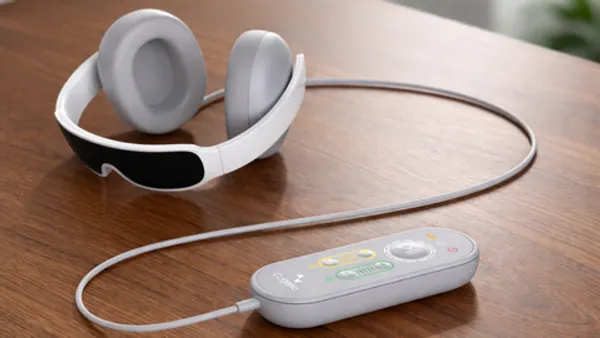
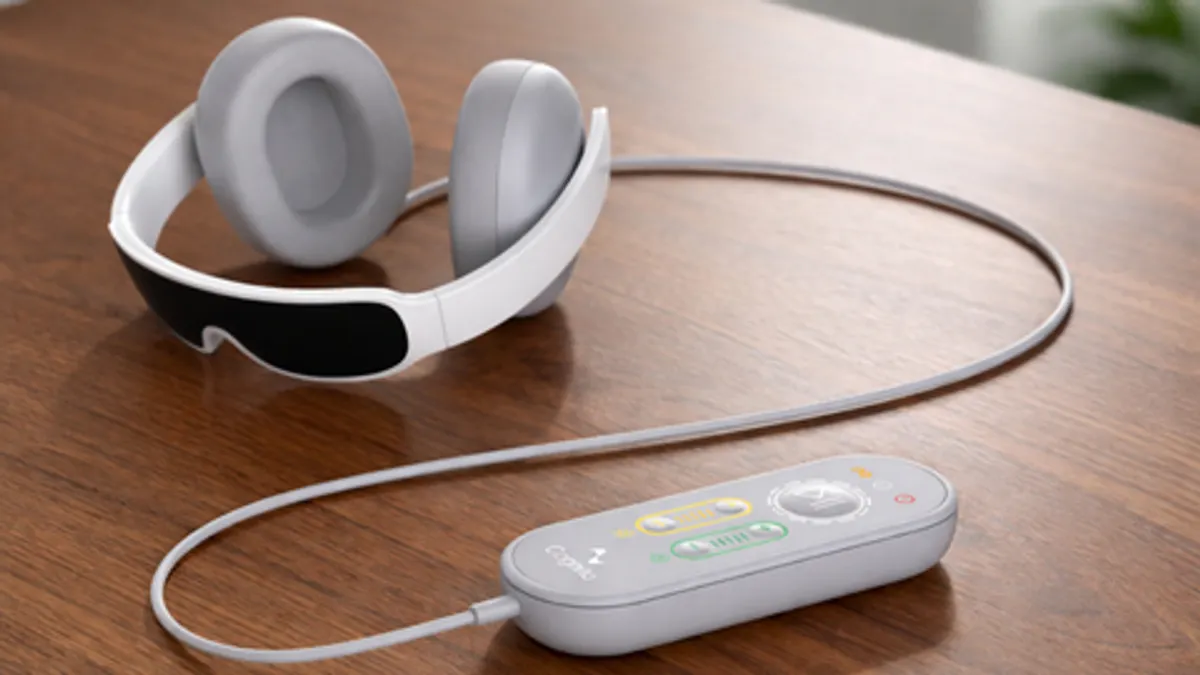
Building on the findings, Cognito has developed a noninvasive device that looks like a pair of sunglasses attached to headphones. Users can adjust the intensity of the audio and visual stimulation using a controller wired to the headset. Patients in the trial wore the device for one hour a day, during which time they were advised to minimize movement and stay awake.
In the study, which was not statistically powered to evaluate potential efficacy outcomes, the device was no better than sham therapy on a composite measure of mild-to-moderate Alzheimer’s symptoms. Yet secondary endpoints revealed signs of efficacy, leading Cognito to start enrolling about 670 patients in a pivotal study of the device.
Expecting pivotal data this year, Cognito has raised a Series C round to support a regulatory submission and commercial launch. The Food and Drug Administration granted breakthrough status to the device in 2021, potentially making it eligible for the transitional coverage for emerging technologies pathway. If authorized, the device will be prescribed by physicians and used by patients at home.
Morningside Ventures, IAG Capital Partners and Starbloom Capital led the Series C financing round, with support from new investors including New Vintage, Apollo Health Ventures and Benvolio Group.