Dive Brief:
- Distalmotion is pushing ahead in its U.S. market expansion with receipt of the Food and Drug Administration’s go-ahead for a second set of indications in gynecology.
- The maker of the Dexter robotic surgery system said Tuesday it received FDA clearance for a trio of procedures to treat pelvic organ prolapse and for endometriosis resection.
- The additional gynecologic procedures bolster Distalmotion’s efforts to provide ambulatory surgery centers and other outpatient care sites with a robotic surgery option that allows administrators to expand their service offerings in women’s health, the company said.
Dive Insight:
Distalmotion is pursuing a strategy centered on ASCs and outpatient centers, where it sees a need for a robotic platform that can support the migration of more same-day surgeries to the facilities.
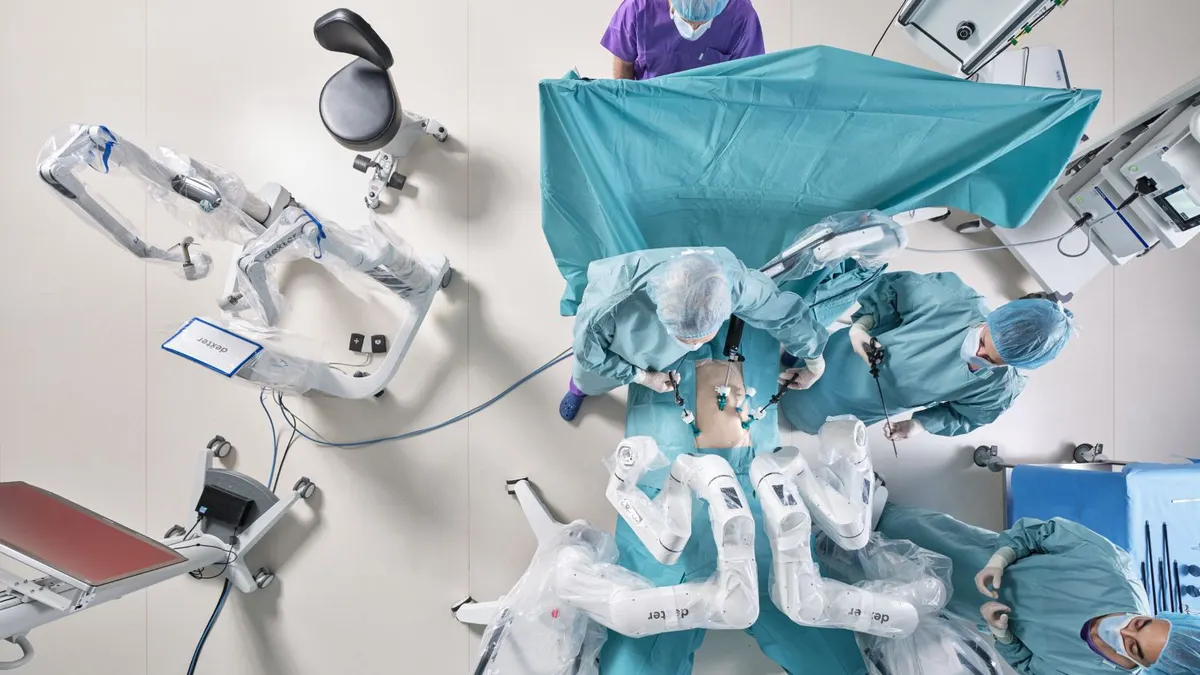
The robot maker has designed the Dexter system specifically for the ASC environment. Its compact size and portable design distinguish it from Intuitive’s da Vinci system that has become a mainstay in many U.S. hospitals.
Noting the importance of efficiency in lower-cost ASCs, Distalmotion said the new gynecologic indications will help providers maximize use of the Dexter system.
The latest FDA authorization adds three reconstructive surgical procedures to correct pelvic organ prolapse to the Dexter robot’s capabilities, in addition to endometriosis resection, where abnormal tissue growing outside the uterus is removed.
Distalmotion previously received a gynecology clearance for hysterectomy and ovary removal. Dexter is also cleared in the U.S. for gallbladder removal and inguinal hernia repair.
The Switzerland-based company said it is studying the use of the robot in myomectomy, a procedure to remove uterine fibroids, in a U.S. investigational device exemption trial.
More than 4,000 patients have now been treated with Dexter, the company said.