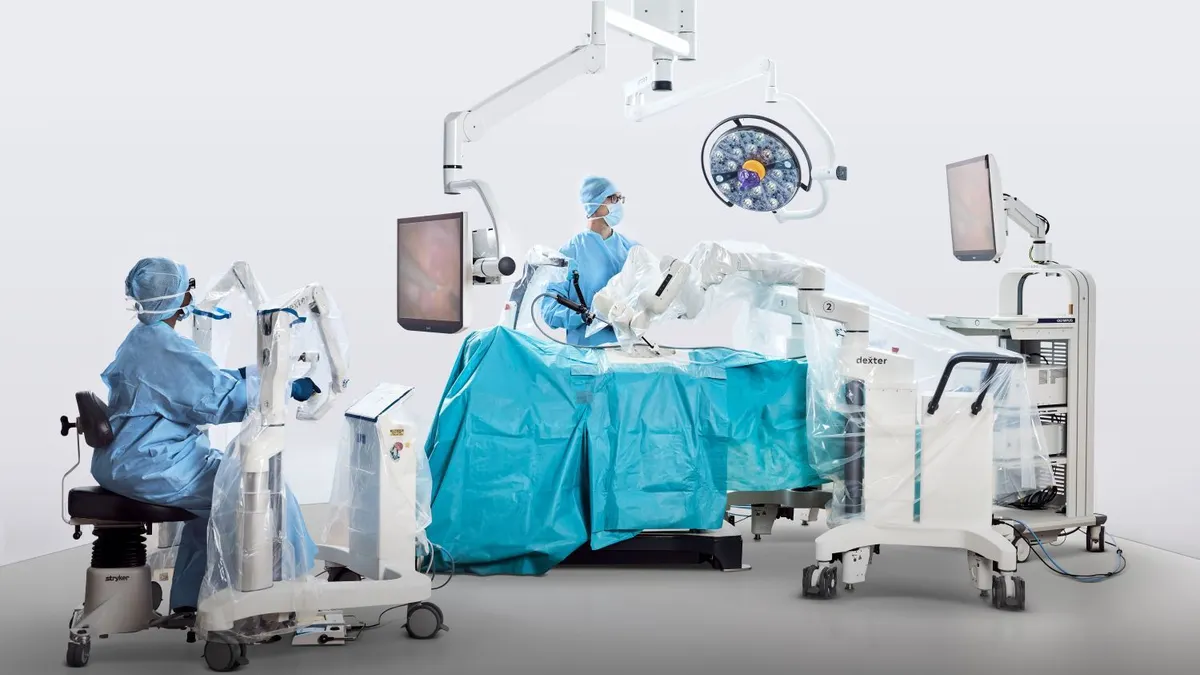
Dive Brief:
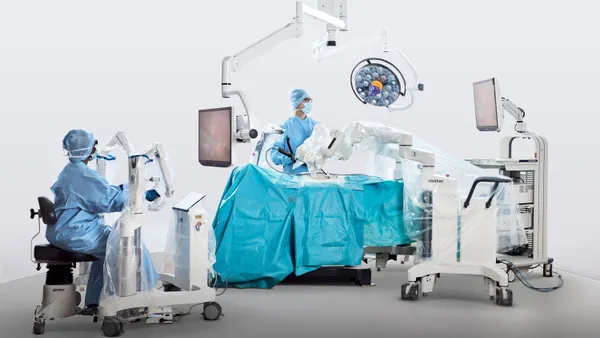
- Distalmotion has submitted a 510(k) application to expand the label of its Dexter robotic surgery system in the U.S., the company said Wednesday.
- The company aims to expand use of Dexter in gynecological indications, strengthening its push to support ambulatory surgical centers that want to perform more outpatient procedures.
- Distalmotion has identified ASCs, which may have less space, resources and infrastructure than hospitals, as sites of care where Dexter could have an advantage over existing surgical robots.
Dive Insight:
The Food and Drug Administration has cleared Dexter for use in gallbladder, hysterectomy and hernia repair procedures. Distalmotion’s new filing covers sacrocolpopexy, sacrocervicopexy and endometriosis resection. Sacrocolpopexy and sacrocervicopexy are similar procedures that treat pelvic organ prolapse. Endometriosis resection removes tissue growing outside the uterus.
Distalmotion CEO Greg Roche said in a statement that “expanding gynecology capabilities in outpatient environments represents an important next step in the evolution of the Dexter robotic program.” The Swiss company is targeting ASCs building gynecology programs.
The company recently completed an observational trial of Dexter’s safety and efficacy in sacrocolpopexy and sacrocervicopexy. Distalmotion also received FDA approval to start a trial in myomectomy, a procedure to remove fibroids from the uterus. The company said myomectomy represents a large part of the U.S. gynecologic surgery sector, with the market estimated to be worth $1 billion by 2030.
Multiple companies are targeting the ASC robotic gynecological surgery opportunity. Intuitive, which has been discussing moving gynecological procedures to outpatient settings since at least 2017, again cited the therapeutic area as an opportunity for ASC expansion on an earnings call in January. Intuitive CEO David Rosa named benign gynecological surgeries as procedures amenable to the ASC environment.
Vicarious Surgical, which recently received a New York Stock Exchange delisting notice, has identified gynecological procedures as a focus for its ASC-focused robot. The company plans to launch in ventral hernia repair before expanding into other abdominal procedures, including gynecological, urological and general surgery uses.
Distalmotion raised $150 million in November to accelerate commercial adoption of its robot. Investors are betting that the company’s relatively small, mobile robotics platform will give it advantages in ASCs.