Johnson & Johnson’s cardiovascular segment fueled strong sales growth for the healthcare giant’s medical device business in 2025.
The cardiovascular business, which includes electrophysiology, as well as the Abiomed and Shockwave Medical units, grew year over year by double digits — the only medtech unit to do so, according to earnings results released Wednesday morning.
The cardiovascular business is a key piece in J&J’s recent strategy to shift its focus to higher growth end markets, a decision that led to the company’s decision to split from its orthopedics segment.
Tim Schmid, J&J’s worldwide chairman of medtech, told investors on an earnings call that the portfolio transformation is working, and higher growth markets will continue to make up a larger piece of the medtech business. About half of J&J’s medtech assets are participating in higher growth markets, compared with about 20% in 2018, Schmid said. That figure is expected to grow to north of 70% following the orthopedic separation.
“As a result, we believe, frankly, that our best days are ahead,” he added.
Cardiovascular sales totaled $8.93 billion in 2025, representing year-over-year growth of nearly 16%. Within the business, Abiomed and Shockwave — which J&J shelled out nearly $30 billion combined for — both topped $1 billion in sales for the year.
While pulsed field ablation has been driving rapid growth in electrophysiology for competitors like Boston Scientific, J&J’s electrophysiology unit continues to grow at a slower clip. Electrophysiology sales grew 7% year over year to $5.63 billion last year, and growth slowed in the fourth quarter compared with the third and second quarters.
J&J’s Varipulse PFA system has been used in nearly 40,000 patients with atrial fibrillation, compared with more than 10,000 reported in the second quarter. The company has big plans for the segment, with CEO Joaquin Duato saying J&J expects to release a new PFA catheter every year through the end of the decade.
Schmid reiterated that electrophysiology is a priority for the company, repeating his sentiment from a prior earnings call that J&J is not rolling over as competition increases, particularly in PFA.
“J&J’s strength lies in our comprehensive portfolio of integrated [electrophysiology] solutions, mapping ablation and cardiac imaging technologies, combined with our best in class mappers,” Schmid said. “We remain resolute and confident that our deep [electrophysiology] expertise earned over 30 years, and our robust pipeline, position us well to continue to drive global leadership in this important space.”
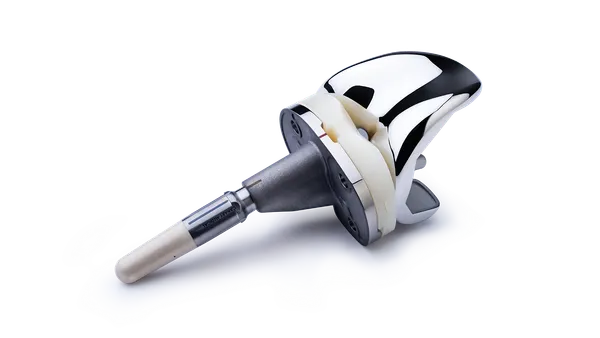
While J&J continues to see success in cardiovascular, sales in the orthopedics business stalled last year. The unit’s sales grew by just 1.1%, to total $9.26 billion.
J&J announced in October that it would spin out the business into a stand-alone company, allowing J&J to focus on higher growth markets like cardiovascular and surgical robotics. CFO Joe Wolk said the separation is expected to take place in mid-2027, adding that the company would provide more details on the spin-off later this year.