Dive Brief:
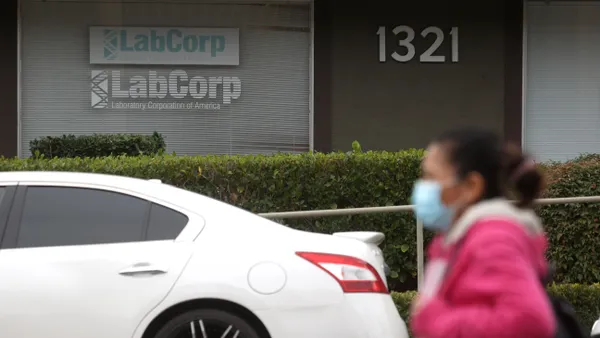
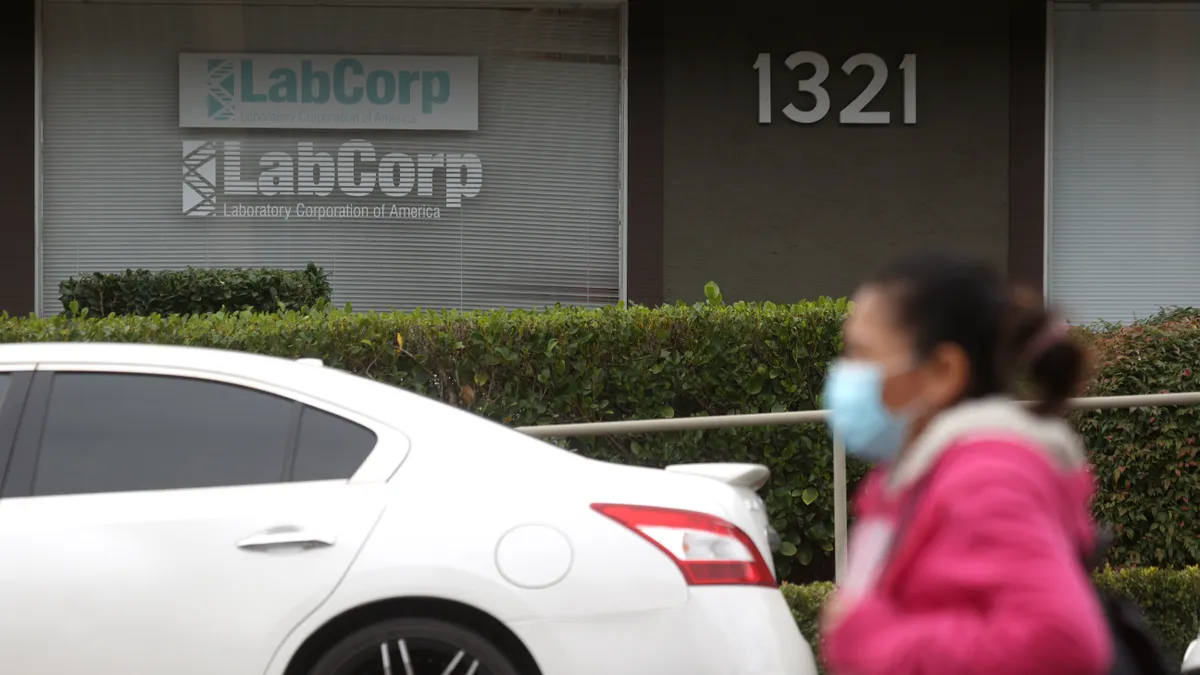
- Labcorp has closed its acquisition of assets from the New York-based clinical laboratory business of Empire City Laboratories, the company said Monday.
- The deal covers patient service centers and other assets. Labcorp, which struck the agreement in September, is paying $165 million upfront and up to $85 million in milestones for the assets.
- Labcorp closed the acquisition on the same day as inking a deal with Somos to be the clinically integrated laboratory provider of choice for certain primary care and specialty providers in New York.
Dive Insight:
Labcorp took a series of steps to expand in New York last year. In October, the company disclosed deals to buy assets from Empire City and Laboratory Alliance of Central New York, a pathology reference lab, alongside an agreement to manage inpatient labs for the Syracuse, New York-based Crouse Health.
Closing the Empire City takeover positions Labcorp to expand access to laboratory collection and testing services. Based in Brooklyn, New York, Empire City serves the Tri-State area. Labcorp will combine the local service with its menu of routine and specialty testing, data analytics and digital tools.
Empire City formed a strategic collaboration with Somos, a network of New York healthcare providers that care for more than one million people, before selling assets to Labcorp. Upon closing the Empire City deal, Labcorp entered into a multi-year agreement with Somos.
Labcorp will be the clinically integrated laboratory provider of choice for all Somos providers, care teams and patients. The company said it will use its network of patient service centers in the region, which it expanded through the Empire City deal, to serve Somos members.
The New York expansion is part of a broader dealmaking plan. At the J.P. Morgan Healthcare Conference in January, Labcorp CEO Adam Schechter said the company struck or closed 13 deals in 2025 as part of its push to consolidate hospital and regional testing labs. Schechter wants to do as many hospital deals as possible.
“They are accretive in the first year, they return their cost of capital in two to three years and we’re very successful in knowing how to integrate them,” Schechter said. “It’s actually a way that we can expand our presence and make testing more broadly available.”
Schechter said the pipeline of takeover targets is strong. Hospitals felt less urgency to strike deals as they began to perform better after the pandemic, Schechter said, but urgency is now returning because they “are worried about what could happen with reimbursement and Medicaid.”
The pipeline means hospital M&A is a growth opportunity “as far as I look out into the future,” the Labcorp CEO said.