Medtech lobbyists and the Food and Drug Administration’s medical device center began negotiations last year on an agreement that sets a significant portion of the center’s budget. The Medical Device User Fee Amendments, or MDUFA, determine how much the FDA can raise in industry fees over a five-year period, supplementing taxpayer funding.
The FDA and industry must come to an agreement before September 2027, when the current MDUFA agreement is set to expire, although stakeholders expect an agreement to go to Congress this year. Device lobbyists called for a renewal of the current agreement, with a similar funding amount and structure, while patient groups emphasized the need for increased safety and transparency. Many stakeholders also raised concerns about the FDA’s capacity after staff cuts that took place last year.
Here are five topics to watch as the FDA and industry near a deal:
1. Negotiations are moving quickly
The medtech industry and the FDA meet multiple times per month to hammer out an agreement for MDUFA VI, which must go to Congress for approval before the current program expires in September 2027. Those meetings take place behind closed doors, and sparse meeting minutes provide an indication of where the discussions are headed. Patient and physician groups, and other stakeholders, participate in separate, monthly meetings.
Diana Zuckerman, president of the National Center for Health Research, a nonpartisan think tank, told MedTech Dive that the FDA and industry aim to bring a commitment letter to Congress this year, possibly before the midterm elections this fall. Zuckerman and other stakeholders said an agreement could come as early as the first quarter of 2026.
“They seem to be moving quickly,” Zuckerman said. “They're happy with the way things are. Industry is happy. FDA is happy.”
Medtech lobbying groups AdvaMed and the Medical Device Manufacturers Association, or MDMA, declined to comment on the negotiations. When asked about the timing and amount of funding the FDA hopes to see in the next agreement, Department of Health and Human Services spokesperson Andrew Nixon pointed to meeting minutes.
In broad summaries of their discussions, the FDA described a need for more resources, while the medtech industry called for similar terms to the current user fee agreement. The current program, MDUFA V, allows the FDA’s Center for Devices and Radiological Health to receive $1.78 billion to $1.9 billion over five years, with the final tally depending on whether the agency meets certain performance and hiring goals.
The MDMA noted a “significant ramp up in user fees under MDUFA V, especially in the last two years of the program,” according to a summary of an Oct. 29 meeting.
In the same discussion, AdvaMed called for the FDA to keep the current MDUFA V framework, adding that the program has reached a “steady state.” The FDA had been considering a simpler fee structure without adjustments for hiring goals and add-on payments for performance.
2. Patient groups and industry are worried about staff cuts
After the Trump administration slashed the FDA’s workforce last year, industry and patient groups alike have been raising concerns about the impact. While the FDA has never stated how many people were cut, the HHS said last spring that it would cut 3,500 FDA workers, and a ProPublica analysis in August found that the CDRH had lost more than 20% of its staff due to cuts and attrition.
“The FDA clearly has expressed to us, stakeholders outside the industry, that they’re shorthanded,” said Michael Abrams, a senior health researcher at consumer advocacy nonprofit Public Citizen. “They’re feeling stressed for obvious reasons. The FDA has received huge, nondiscriminate [Department of Government Efficiency] cuts.”
In discussions with industry, the FDA’s device center has acknowledged challenges. For the majority of 2025, “staff have been focused solely on review work, which has created some system strain,” the agency said in an Oct. 29 meeting.
The FDA’s device center received funding to support just over 500 new hires under the current user fee agreement, according to the MDMA. The lobbying group asked in the meeting how the increased funding would be invested, “given the reports that CDRH staffing is down 20% and a federal hiring freeze remains in place.”
The CDRH committed to “maintaining or achieving appropriate staffing levels” to meet its goals in a Dec. 2 meeting. A week later, industry groups called for confirmation that new hires funded under MDUFA V will be realized by the end of fiscal 2027, according to meeting notes.
Madris Kinard, a former FDA public health analyst and CEO of Device Events, said it may be challenging to hire people, adding that it can take six months to a year to hire at the FDA.
“The people that were let go are in a real bind and may not be willing to go back to something that's unsure,” Kinard said.
3. The FDA’s proposals include changes to user fee triggers, higher fees overseas
The FDA proposed changes to “triggers” that determine whether the agency can continue to collect user fees. Currently, there are two triggers intended to ensure that user fees supplement the FDA’s budget rather than replacing congressional funds. Congress must provide a certain level of funding for CDRH, and CDRH must spend a certain amount of non-user-fee funding on device reviews and other costs.
Politico raised concerns in April that the staff cuts could put CDRH at risk of not meeting the spending cutoff.
Medical device user fee collections have increased since the start of the program
In the Dec. 2 meeting, the FDA proposed changing the appropriation and budgetary spending thresholds, including increasing both thresholds and the operating reserve to cover extended lapses in funding. Industry representatives said a week later that they were open to discussions on the spending trigger but opposed changing the appropriations trigger.
Another big change proposed by the FDA is to levy more fees from medical device companies overseas than in the U.S.
The agency said the changes would account for the additional resources needed to oversee foreign firms, adding in a Dec. 12 meeting that companies operating within the U.S. may see flat or decreased fees.
4. Patient groups call for more focus on safety and effectiveness
Patient advocates called for more FDA funding to go toward ensuring devices are safe and effective, rather than emphasizing speed of reviews. Some people, including Public Citizen’s Abrams, called for more funding from Congress to support postmarket reviews and recalls.
Abrams also raised concerns about fast-track programs for medical devices. Last year, the FDA and the Centers for Medicare and Medicaid Services announced a pilot where device makers can ask the agency to waive premarket authorization and investigational device requirements for some digital health products while they collect real-world data.
“[HHS Secretary Robert F. Kennedy Jr.] and [FDA Commissioner Martin Makary] say they want gold standard evidence, but are also calling for lowering standards and fast-track approvals,” Abrams said.
Alexander Naum, policy manager for Generation Patient, a nonprofit representing young adults with chronic health conditions, said he was also worried about fast-track programs, and called for more postmarket monitoring of medical devices. For implants in particular, Naum would like to see reporting requirements to help patients better understand how a medical device is going to age and mature with them.
“We're just really concerned when that innovation isn't coming with appropriate safeguards needed to protect patients,” Naum said.
Stakeholders also called for more user-friendly adverse event reporting and more enforcement to ensure device companies report malfunctions, injuries and deaths in a timely fashion. They noted a recent government watchdog report found the FDA needs more staff and authority to oversee medical device recalls.
5. Without access to industry meetings, public input is limited
Patient groups told MedTech Dive that it was difficult to provide input on the negotiations with industry because they are denied access to those meetings and have to rely on vague minutes to understand what the FDA and device lobbyists are discussing.
During the previous round of user fee negotiations in 2022, the FDA’s device center received criticism from senators after neglecting to post meeting minutes for months. In the current negotiation, minutes are posted weeks after meetings and include few details on the meat of what was discussed.
“It's challenging for stakeholders to engage productively when the details of the negotiations are kept in the dark."

Isabella Xu
Policy associate at the Center for Science in the Public Interest
This has been a “major barrier” in keeping track of where the FDA and industry are at in negotiations, said Isabella Xu, a policy associate at the Center for Science in the Public Interest.
“It's challenging for stakeholders to engage productively when the details of the negotiations are kept in the dark,” Xu said.
Patient advocates also said that sometimes the topics presented by the FDA at stakeholder meetings don’t match what patients care about. The Patient, Consumer and Public Health coalition, a group of more than two dozen nonprofits focusing on medical and consumer products, said in an emailed statement that the scope of the meetings is limited and many of the topics focus on making reviews faster and offering industry more access to FDA staff and expertise.
“There’s just nothing about issues that a lot of the patient groups really care about,” NCHR’s Zuckerman said. “Yes, patient groups care about access, but they also care about safety and they also care about effectiveness.”
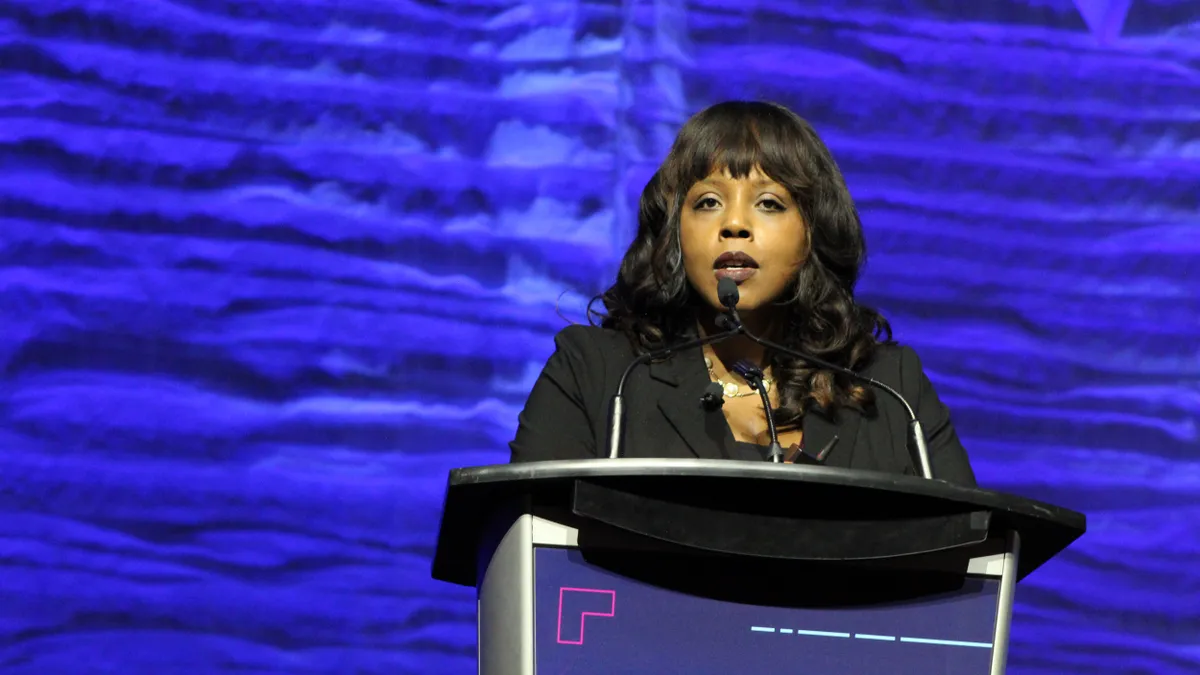
Clarification: The photo caption was updated to reflect Michelle Tarver's current title, which is director of the FDA’s Center for Devices and Radiological Health.