Dive Brief:
- Medtronic has partnered with Precision Neuroscience to pair a brain computer interface with its neurosurgical platform.
- The agreement, which the companies disclosed Monday, supports co-development of a system that integrates Precision’s Layer 7 cortical interface with Medtronic’s StealthStation surgical navigation system.
- Precision said the alliance will shorten the path to widespread clinical use of Layer 7 by enabling surgeons to use its high-resolution electrode technology with a familiar Medtronic system.
Dive Insight:
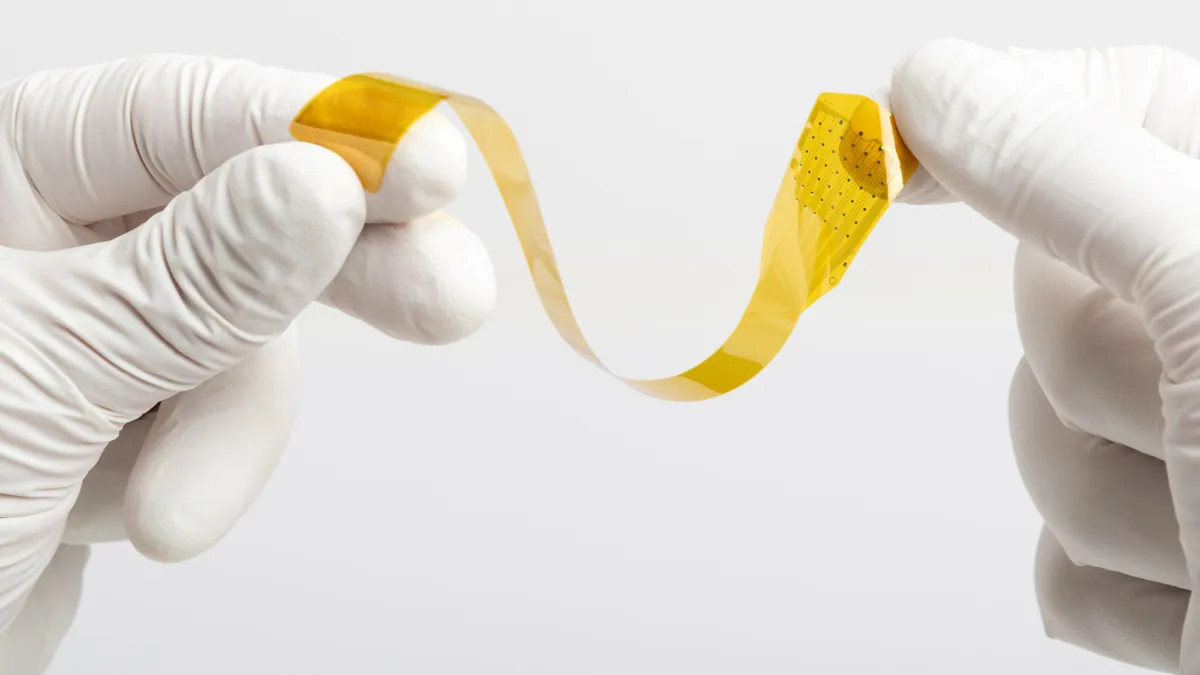
Layer 7 is a thin film microelectrode array that the Food and Drug Administration has cleared for use in the temporary recording, monitoring and stimulation of electrical signals on the surface of the brain. The 510(k) clearance allows surgeons to place the device in either open or burr hole procedures with the optional use of standard imaging techniques.
Precision said neurosurgeons now often use different tools to visualize brain structure and function. The separation of structure and function visualization can limit the precision and speed of intraoperative decision-making, according to the BCI company. Precision pitched the integration of its device with StealthStation as a way to give surgeons real-time functional and structural information.
StealthStation is a surgical navigation system that enables surgeons to locate anatomical structures. The system interfaces with intraoperative imaging systems to show surgeons images of a patient’s anatomy, for example in procedures to place deep brain stimulation leads and perform spine decompression. The Precision integration could expand the system’s capabilities.
“By integrating Precision Neuroscience’s advanced brain mapping technology with our trusted cranial and spinal technology, we’re exploring the future of cranial surgery and accelerating the global adoption of adaptive, intelligent therapies,” Brett Wall, president of Medtronic’s neuroscience portfolio, said in a statement.
Precision CEO Michael Mager highlighted the benefits of partnering with Medtronic, a company that he said “provides ubiquitous and trusted platforms in neurosurgery.” By integrating its microelectrode array into a tool surgeons already rely on, Mager believes Precision can achieve “a step change in how quickly we can bring these capabilities into everyday practice.”
The push to accelerate uptake comes as BCI companies work to deliver a return on the investment that has flowed into the sector in recent years. In November, Synchron raised $200 million, which followed the $102 million round that Precision raised in late 2024.