Dive Brief:
- Philips sent an urgent field safety notice to customers in March instructing them to no longer use non-pneumatic nebulizers, including vibrating mesh nebulizers, with its Trilogy Evo ventilators.
- The Food and Drug Administration posted the action in its database last week as a Class I recall. It applies to Philips’ Trilogy Evo, Trilogy Evo O2, Trilogy Evo Universal and Trilogy EV300 ventilators.
- A Philips spokesperson wrote in an email to MedTech Dive that the ventilators may be used safely by following the revised instructions.
Dive Insight:
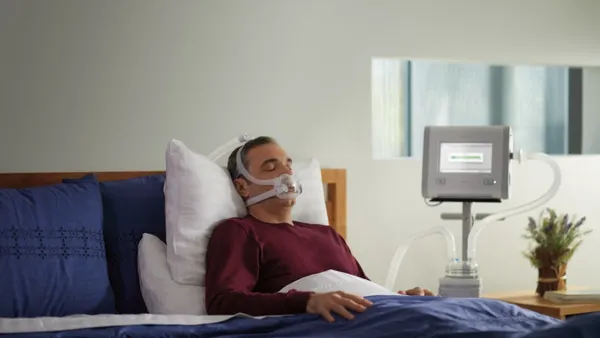
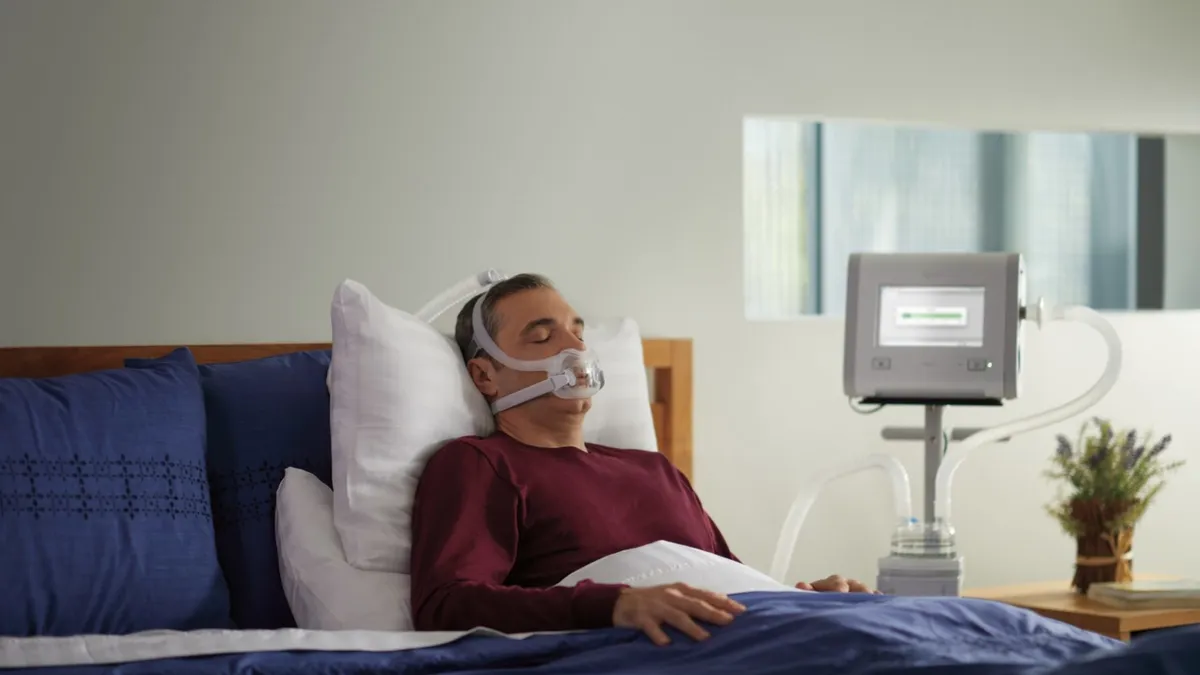
Philips’ Trilogy Evo ventilators provide invasive and noninvasive ventilation, and can be used at home or during patient transport.
Philips sent customers a product notice about an obstruction alarm compliance failure in the ventilators in 2024. The notice said Philips planned to issue a software update to correct the issue.
In another notice, sent in March, Philips provided information on three different failure modes that can happen with its Trilogy Evo ventilators. The company instructed users to update software on their devices. Philips also warned not to use non-pneumatic nebulizers with the devices because it can cause a discrepancy between the set tidal volume and the volume of air received by the patient, potentially resulting in under-delivery of therapy.
Philips proactively evaluates product performance and updates labeling or instructions for use when appropriate as part of its post-market surveillance efforts, the spokesperson said.
The recall affects more than 113,700 devices distributed worldwide, according to the FDA database entry.
After a 2024 consent decree, Philips was barred from selling certain respiratory devices in the U.S., including its Trilogy Evo devices. The ventilators have been recalled in recent years for problems with false alarms and other software issues, and for certain ventilators using the same PE-PUR soundproofing foam that was the subject of a larger recall of Philips’ respiratory devices.