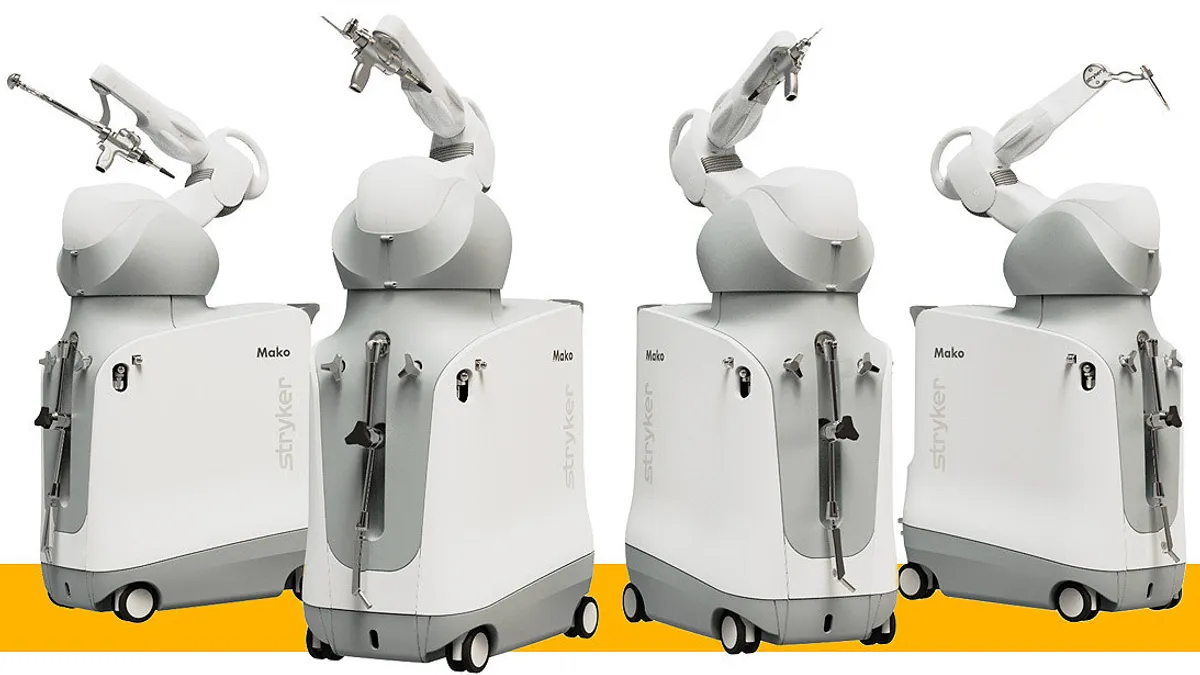
Stryker this month started its first cases using a handheld robot for knee surgeries. The device, called Mako RPS, is a miniaturized version of Stryker’s Mako surgical robots for orthopedic procedures.
CEO Kevin Lobo told investors on a Thursday earnings call that the smaller robot is intended to be easier to use, with less change required for surgeons and hospital staff than its traditional Mako system. Lobo expects Mako RPS to open up new customers for Stryker, and to be more of an attractive option for ambulatory surgery centers.
“If you think about the ASC — some surgeons not wanting the complexity of Mako — I think it’s going to open up new customers for us that weren’t ready for Mako but want something better than using manual instruments,” Lobo said.
Stryker plans to have Mako RPS on display at the American Academy of Orthopaedic Surgeons meeting in March.
Robotics as ‘standard of care’
Stryker’s traditional Mako robotic system was also a highlight of the call. The install base for Mako has now surpassed 3,000 systems worldwide, BTIG analyst Ryan Zimmerman wrote in a research note, exceeding Stryker’s expectations when it acquired Mako in 2013.
More than two-thirds of Stryker's U.S. knee procedures and one-third of U.S. hip procedures are performed using a robot.
Last year, Stryker announced the fourth generation of its Mako surgical robot. The company plans to bring a shoulder feature, currently in a limited launch on the Mako 3 robot, to Mako 4 in mid-2026.
“I don’t think there’s any limit,” Lobo said when asked about the future of Stryker’s robotic business. “I think robotics can become the standard of care at some point in time.”