Dive Brief:
- Vitestro has raised $70 million to prepare to bring its autonomous diagnostic blood collection robot to the U.S. market, the company said Tuesday.
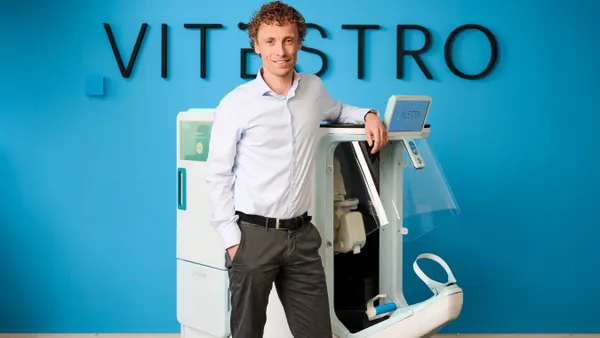
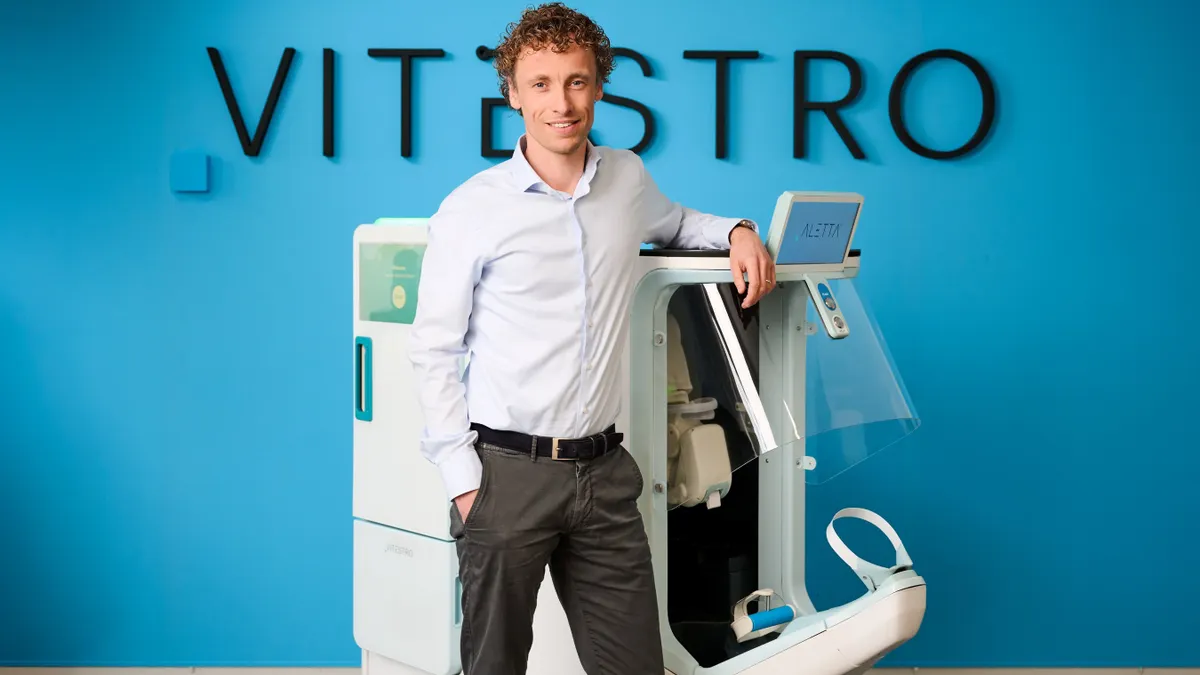
- The company’s Aletta device uses imaging, robotics and artificial intelligence to identify veins, guide needle insertion and collect blood samples.
- Backed by investors including Labcorp Venture Fund, Mayo Clinic and Sutter Health, Vitestro is preparing to bring Aletta to the U.S. market via the de novo pathway.
Dive Insight:
Blood sample collection is an essential step in diagnosing and monitoring patients. Currently, trained healthcare workers primarily perform the task manually. However, collection facilities are grappling with staffing challenges, issues with blood sample quality and other problems.
Vitestro’s Aletta automates blood collection from applying the tourniquet to placing the bandage over the needle puncture site. The device combines near-infrared and ultrasound imaging to locate a suitable vein, plus Doppler ultrasound to confirm it has chosen a vein, not an artery. Aletta positions and inserts a needle into the selected vein to collect the blood sample.
The company designed Aletta to make blood collection more consistent and cut staffing requirements, with one supervisor overseeing up to three systems. Vitestro has shown the first-time blood draw success rate and procedure duration are comparable to manual phlebotomy. The rate of in vitro hemolysis, the destruction of red blood cells that can make samples unusable, was also comparable.
Vitestro received a CE mark in 2024, after which it began a limited market release at selected European hospitals and clinical laboratories. Last year, the company said it was preparing for broader adoption of the device while running a clinical trial in the U.S. to support its global expansion.
The $70 million Series B round will support these activities. Vitestro said it will use the money to fund its pursuit of authorization via the Food and Drug Administration’s de novo pathway and prepare to expand access to the device, starting in Europe. The company plans to scale up manufacturing and commercial activities.
Vitestro intends to enhance the platform’s technical capabilities and integration into existing technology infrastructure. Clinical trials and pilot programs to embed the technology into real-world workflows are also on the company’s roadmap.
Labcorp Venture Fund, the investment wing of the eponymous laboratory services company, participated in the Series B round. Megann Vaughn Watters, head of the fund, said in a statement that “applying robotics, multimodal imaging and AI to clinically validated diagnostic blood collection is an exciting approach.” Labcorp employs phlebotomists to collect blood samples for testing at its laboratories.
Mayo Clinic and Sutter Health participated in the round, as did Intuitive Surgical co-founder Fred Moll. An existing investor in Vitestro, Moll said in a statement that Aletta “has the potential to establish a new standard of care, much as robotic surgery did in its early days.”