Dive Brief:
- Zimmer Biomet named Jonathan Vigdorchik as the company’s chief science, technology and medical affairs officer, effective April 14.
- Vigdorchik will oversee Zimmer’s technologies including artificial intelligence, robotics, smart implants and data. He will also oversee Zimmer’s medical education strategy and global advisory board.
- “[Vigdorchik] understands how to translate clinical insight into meaningful innovation, and his leadership will help us move faster, think bigger and continue advancing our broad suite of robotic and enabling technologies,” CEO Ivan Tornos said in a Tuesday statement.
Dive Insight:

Vigdorchik, an orthopedic surgeon at the Hospital for Special Surgery in New York City, previously worked with Zimmer as its chief medical technology adviser for adult reconstruction and hip implants. Vigdorchik specializes in hip and knee replacement surgery.
In his new role, Vigdorchik will report to Tornos.
"As a surgeon and innovator, I believe we are at an inflection point where AI, data, and advanced technology will fundamentally redefine the future of orthopedics," Vigdorchik said in a statement.
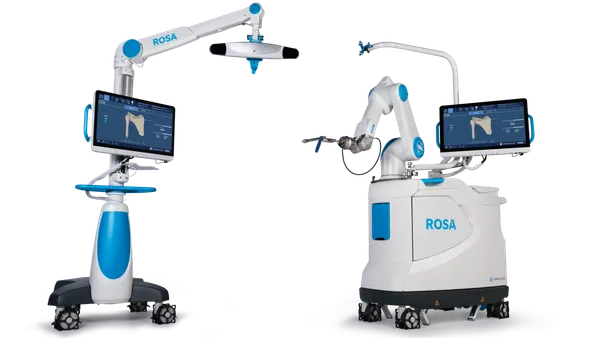
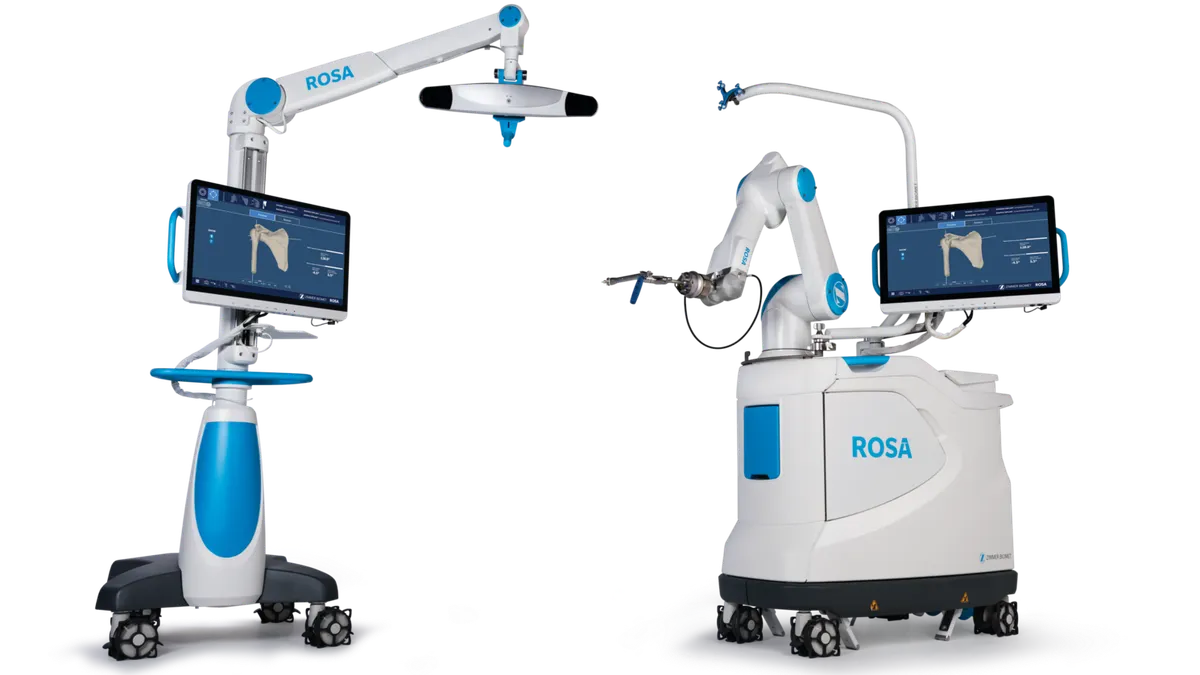
Zimmer currently offers its Rosa surgical robotic system for knee, hip and shoulder procedures. Last year, the company acquired Monogram Technologies, which makes a semi-autonomous, AI-navigated robot for total knee replacement surgeries. Zimmer had the strongest robotic capital sales quarter in more than two years, Tornos said in February on a fourth-quarter earnings call, although the company did not share specific numbers.
Zimmer has also invested in smart knee implants with built-in sensors to collect information on stride length, range of motion, step count and other metrics. At the American Academy of Orthopaedic Surgeons conference in March, the company shared an analysis of people who received the smart implant with Zimmer’s Mymobility platform, which provides patient education and exercises after a procedure. The analysis found people with the smart implant and the app had better outcomes a year after surgery than people who received a traditional implant, although further study is needed to understand why.