


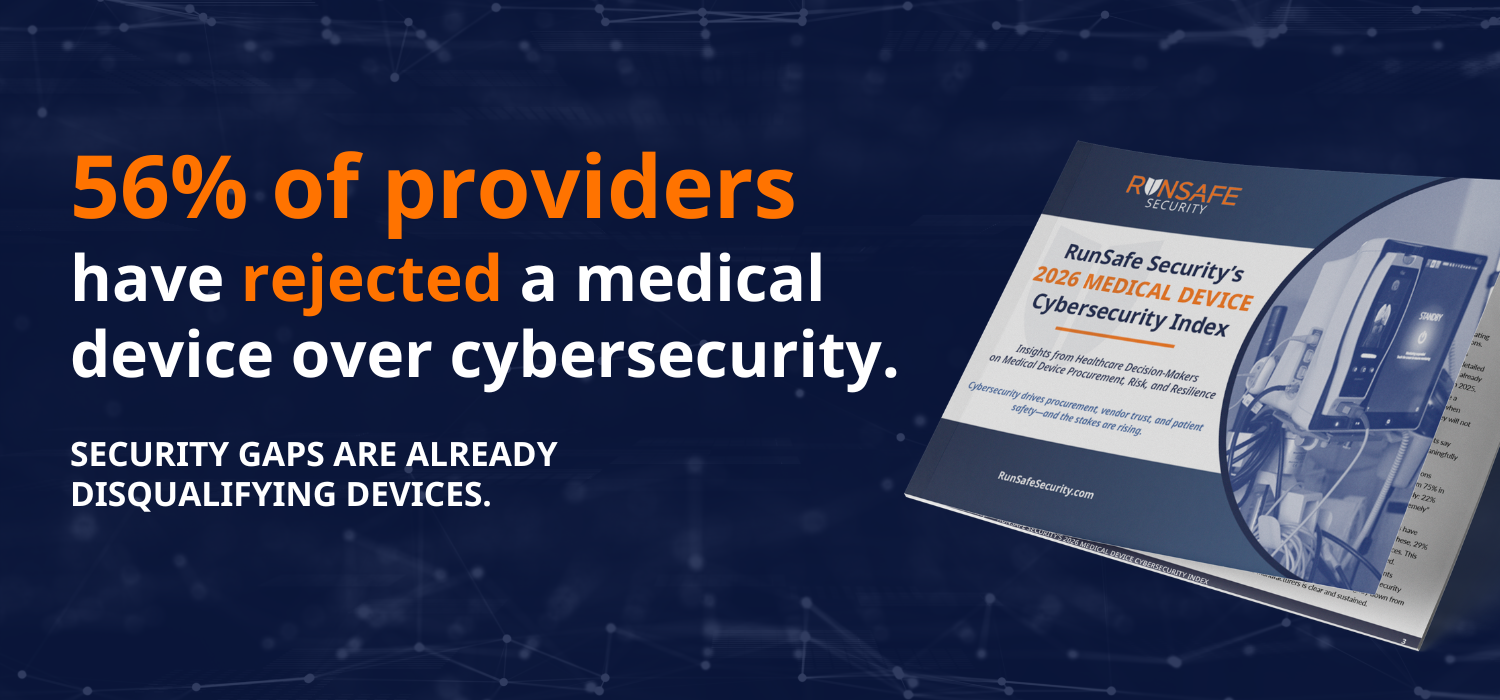
Cyberattacks affecting medical devices are increasingly disrupting patient care and influencing purchasing decisions, according to the newly released 2026 Medical Device Cybersecurity Index from RunSafe Security.
The report, based on a survey of 551 healthcare professionals across the United States, the United Kingdom, and Germany, found that 24% of healthcare organizations experienced cyberattacks or had medical device vulnerabilities exploited. Among those incidents, 80% caused moderate or significant disruption to patient care.
The findings point to a growing operational and clinical impact from medical device cybersecurity incidents as providers continue to balance digital transformation with mounting security concerns.
Healthcare organizations reported disruptions, including delayed imaging, postponed procedures, and interruptions to critical care delivery, highlighting how device-related cyber incidents can extend beyond IT systems into frontline clinical operations.
At the same time, healthcare providers are increasingly incorporating cybersecurity into procurement and vendor evaluation processes.
Among the report’s findings:
- 84% of organizations include cybersecurity requirements in procurement processes
- 56% rejected devices due to cybersecurity concerns, up from 46% in 2025
- 44% reported using devices with known, unpatched vulnerabilities
- 28% continue operating devices past end-of-support
- 57% reported using AI-enabled or AI-assisted medical technologies
The report also found that healthcare organizations remain concerned about risks associated with emerging technologies. While adoption of AI-enabled medical systems continues to expand, 80% of respondents reported moderate to high concern about cybersecurity risks associated with those technologies.
“The findings reflect a broader shift in how healthcare organizations evaluate cybersecurity risk,” said Joseph M. Saunders, founder and CEO of RunSafe Security. “Medical device cybersecurity is increasingly viewed as a patient safety, operational resilience, and regulatory issue, not simply an IT concern.”
The report comes amid heightened attention on healthcare cybersecurity following large-scale attacks that have disrupted hospital operations, delayed care delivery, and strained provider revenue cycles.
According to the survey, many organizations continue facing exposure from legacy infrastructure and unsupported systems, even as procurement standards improve. Respondents cited aging devices, unpatched vulnerabilities and rapidly deployed connected technologies as ongoing challenges for clinical environments.
As connected medical devices become more integrated into care delivery, the report suggests healthcare providers are placing greater emphasis on security requirements throughout the device lifecycle, from procurement through deployment and ongoing maintenance.
The full 2026 Medical Device Cybersecurity Index is available from RunSafe Security.
About RunSafe Security
RunSafe Security protects embedded software used across critical infrastructure sectors through automated vulnerability identification and software hardening technologies designed to reduce cyber risk without requiring source code changes or affecting system performance.
The RunSafe Security Platform includes software bill of materials (SBOM) generation for embedded systems, vulnerability identification and risk analysis, license compliance capabilities and memory protection technologies designed to help defend against exploitation.
RunSafe Security is headquartered in McLean, Virginia, with additional operations in Huntsville, Alabama.
For more information, visit runsafesecurity.com.