The $21 billion acquisition of Exact Sciences marked Abbott’s entry into cancer diagnostics, where a growing focus on blood-based screening tests holds promise for earlier detection and more targeted, personalized treatment. Progress continues to evolve, with research aimed at boosting accuracy and reducing false positives.
Exact built the foundation with its flagship Cologuard stool test for colorectal cancer screening and Oncotype DX genomic test to inform treatment for breast, colon and prostate cancers. In 2025, it launched the Oncodetect molecular residual disease test that looks for circulating tumor DNA in the blood after cancer treatment and the Cancerguard multi-cancer early detection blood test.
The Exact acquisition, completed in March, adds more than $3 billion in annual revenue to Abbott’s diagnostics portfolio, putting total sales in the segment above $12 billion.
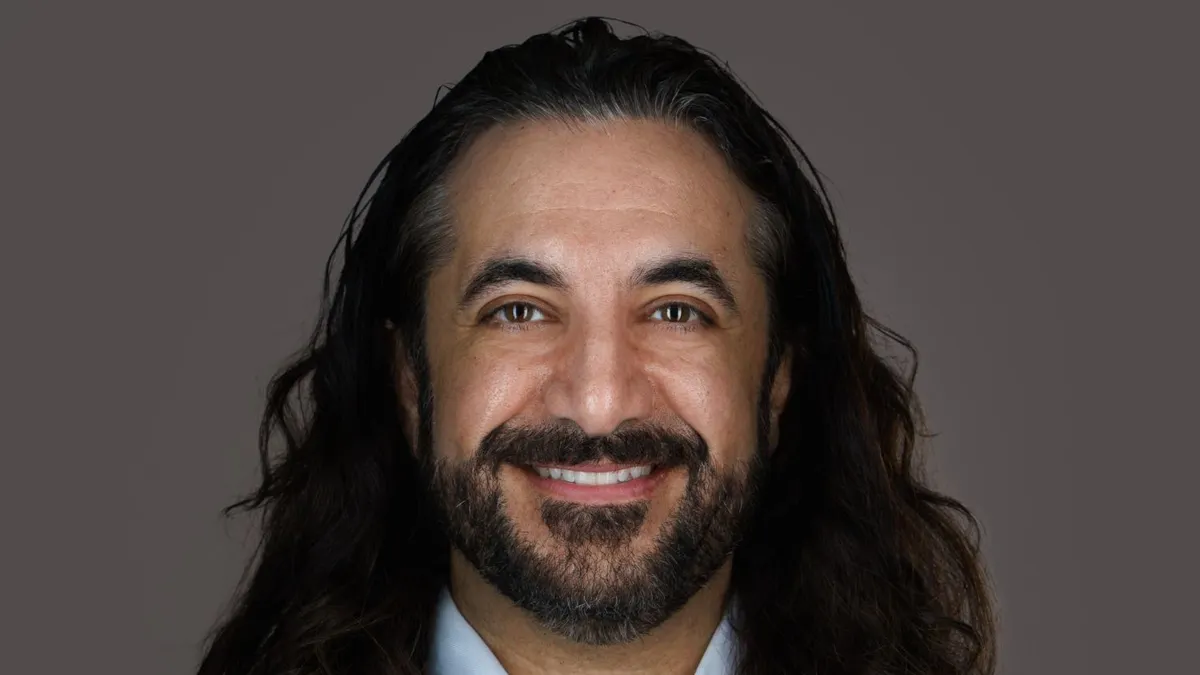
MedTech Dive spoke with Jorge Garces, Abbott’s divisional vice president of cancer diagnostics R&D and previously Exact’s chief science officer, about the company’s strategy to expand cancer screening and approach to blood-based testing, including its collaboration with Freenome.
This interview has been edited for length and clarity.
MEDTECH DIVE: With the acquisition of Exact Sciences, how is Abbott positioning itself across cancer diagnostics?

JORGE GARCES: Our philosophy is that cancer is a longitudinal disease. It's a journey. We really envision this cancer care continuum from diagnosis through helping the patient and the physician make therapeutic decisions with our portfolio, and then monitoring the patient's progress as they're being treated and post-treatment, to see if the therapies have worked or are working.
We don't see cancer care as a single time point, or single test. We see it as a continuum, having the right information at every step of that process.
I share with you that my wife was diagnosed with breast cancer just last year. It was really impactful to see our portfolio hit home. We underwent [Abbott’s] Riskguard testing for hereditary risk of cancer that, at least in our situation, helped her make decisions between the type of surgery that she was going to have, how aggressive between a mastectomy or lumpectomy, and then post surgery, understanding whether she needed chemo.
She really dreaded and was fearful of the idea of having chemo. She got the Oncotype DX test. The test provides some really important pieces of information. It provides a prognosis as to whether there's a high or low risk of recurrence of the cancer. In her case, it was low, which brings tremendous reassurance.
This test has been studied for decades in terms of its ability to be of strong prognostic value. The prediction is whether chemo will really impact your outcome. In her case with a low risk score, chemo was not warranted, and we could be reassured that her outcomes would be just as good as if she had undergone chemo. Two million patients have taken that test, and just knowing that we help millions of women out there, it’s very gratifying.
What work is being done to ensure test accuracy, including in blood-based cancer testing?
Cologuard has been extremely impactful to healthcare for many reasons, one of which is that it has actually helped elevate the screening rates in the United States. We’ve also been really adamant about having high quality performance, high quality products that have tremendous clinical evidence behind them and scientific rigor.
We introduced Cologuard Plus recently, and we're very proud because that test now has 95% colorectal cancer detection and 94% specificity. So it's really best in class among the non-invasive options for colorectal cancer screening.
Sensitivity is a measure of the ability to detect cancer when it's there. Specificity is a measure of false positives.
There's always a hunger to make these tests better, so the work on CRC blood as well as Cologuard and improving the entirety of our portfolio continues.
Abbott is both developing a blood-based colorectal cancer screening test internally and collaborating with Freenome to market its blood test. Where do those efforts stand?
We were very excited to see Freenome's data. We were impressed by their ability to detect cancer. What has been very difficult with the blood test is the inability to detect precancer. Precancer detection is critical for proper colorectal cancer screening. You want to catch precancer before it evolves into cancer. [Freenome’s] test is 18% precancer detection. Still not on par with Cologuard, but best in class.
We have exclusive rights in the U.S. to commercialize and distribute our blood-based tests in collaboration with Freenome, providing an additional option to patients who remain resistant to stool and colonoscopy ways of screening.
One of the challenging things with the blood tests, all versions that are available, is that they are based on NGS [next-generation sequencing technology] and they're very costly to do, unlike Cologuard, which provides from a health economic perspective a very favorable option. These blood tests are expensive, and so what our internal program is focused on is to provide a much lower cost option in the future that we can potentially bring to the market and bring to other parts of the world.
Is Freenome pursuing Food and Drug Administration clearance for its blood-based colorectal cancer test?
The FDA submission went in about a year ago. They're currently reviewing. We anticipate approval of the product in the near future.
How will stool-based and blood-based tests coexist in the market?
There are still 50 million Americans who are eligible for screening that remain unscreened. There is a clear correlation between screening adherence and improved mortality rates from colorectal cancer.
With our ability to provide both stool-based testing and blood-based testing, Abbott then becomes the only company with a portfolio of colorectal cancer screening tests that is a full portfolio, and this will help drive adherence and compliance to CRC screening, and continue to improve patient outcomes. If patients are resistant and they just refuse a Cologuard test, then we will have the opportunity to offer them a blood option.
What is the outlook for multi-cancer early detection testing?
We're very excited about our multi-cancer blood program, called Cancerguard. It's a sad reality, but nearly 70% of all cancers have no recommended routine screening options, and so every seven out of 10 cancers that we uncover are uncovered symptomatically when it's too late or just by chance. You go in for a scan, and they find a lesion. So it's really important to find a way to screen for these cancers.
When you take colorectal, breast, cervical, lung and prostate out, the prevalence of the remaining cancers by type is too low to justify screening programs. It's just not cost-effective to screen everybody for rare cancers. The idea of a multi-cancer test is, what if we could provide a test to screen for all of them in aggregate? That way, the chance of finding any one of those types increases. That then justifies the ability to screen the general population. So it's an aggregate approach to cancer detection, and Cancerguard is designed in essence to help address that gap in screening.
This test is designed for average risk patients. It's intended to complement other screening modalities. People should get the Cologuard test, and they should get a Cancerguard test, for example, because this does not replace colorectal cancer screening. It doesn't replace mammography. It complements those tests to help find all the additional cancers that mammography doesn't find, that Cologuard doesn't find.
We do intend to submit this test for FDA review. We are gearing up to conduct a very large prospective study in the United States. We just launched the test last week in Japan, and so the test is now commercially available in the U.S. and in Japan.
For us, we feel we need to provide a very clear path for follow-up. What our test provides is a very clear cancer signal, and the follow-up is the same for every patient, which has shown to really reduce the time to resolution. After a positive signal, the patient undergoes a CT scan and PET to localize the cancer signal, and then after that, whatever is the appropriate regimen for the cancer.