Dive Brief:
- Mobia Medical has set the terms for its initial public offering, positioning the neurostimulation device company to raise about $150 million.
- Mobia intends to offer 10 million shares for between $14 and $16 each. At the midpoint of the range, the company expects net proceeds of about $134.5 million, or approximately $155.4 million if the underwriters exercise their option to purchase additional shares.
- The company, which shared the information Monday, plans to use about $93.5 million of the IPO proceeds to expand its direct sales force and commercial organization.
Dive Insight:
Mobia said its Vivistim System, which received premarket approval in 2021, is the only approved solution for chronic ischemic stroke survivors with moderate to severe upper extremity impairments.
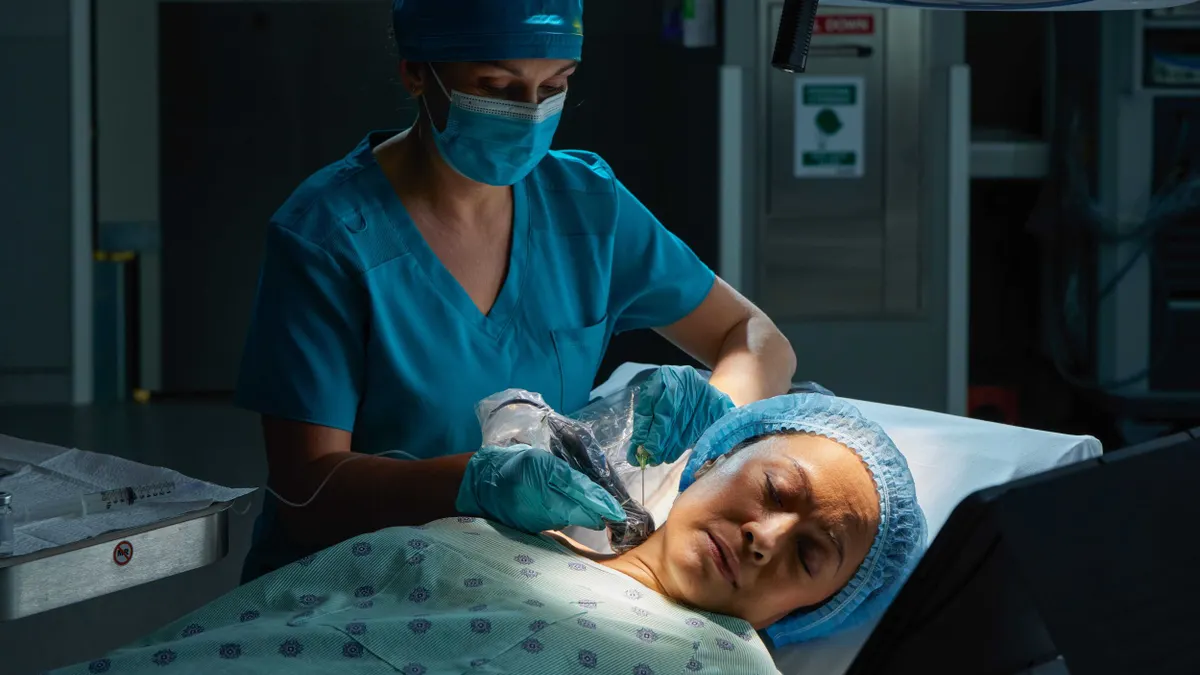
Vivistim is a paired vagus nerve stimulation system. Once the device is implanted, a therapist activates the system during task-specific practice, such as reaching for and grasping objects. Activation triggers the release of neuromodulators to help the brain create and strengthen neural connections. Patients can activate the system at home or during daily activities to reinforce neural retraining.
Mobia, which until this year was called MicroTransponder, launched the device commercially in 2023. Last year, Mobia reported sales of $32 million, double its revenues in 2024. Physicians have implanted more than 1,000 Vivistim systems, including 700 in 2025.
Last year, Mobia reported a net loss of $46.5 million, compared to a net loss of $24.6 million in 2024. The company had $55.7 million in cash and cash equivalents at the end of March, having reported a net loss of about $18 million over the first three months of 2026. Mobia said its losses raise substantial doubt about its ability to continue as a going concern.
The IPO will fund operations for at least 12 months.
Mobia plans to use the money to expand its direct sales force, which featured 83 sales professionals at the end of 2025. The company’s expansion plan includes hiring personnel to grow its commercial team and territory coverage.
The system had Centers for Medicare and Medicaid Services transitional pass-through payment status from 2023 to 2025. With that coverage expiring, CMS assigned a new technology ambulatory payment classification. A service is not paid under the classification until enough claims data have been collected, which can take two to three years. Mobia said it cannot provide assurances about CMS reimbursement.
Most commercial payors view Vivistim as experimental or investigational and require prior authorization. Some customers have experienced coverage denials and extended prior authorization requirements, Mobia said.