Dive Brief:
- Penumbra said Thursday it received Food and Drug Administration clearance for its Thunderbolt computer assisted vacuum thrombectomy device to perform clot removal in stroke patients.
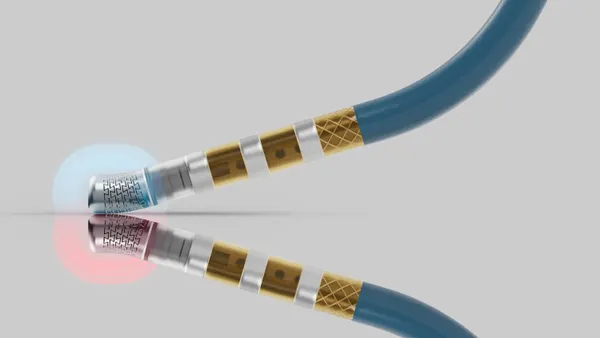
- The device is a first-of-its-kind treatment for acute ischemic stroke, introducing modulated aspiration technology to enable faster and more complete clot removal in neurovascular thrombectomy, Penumbra said.
- FDA authorization of the device is a positive for Boston Scientific, which agreed to acquire Penumbra for about $14.5 billion in January to expand in the mechanical thrombectomy and neurovascular markets.
Dive Insight:
Boston Scientific expects to close the acquisition of Penumbra later this year. Penumbra shareholders gave their approval to the sale in May.
Penumbra makes a range of devices to remove clots from the brain, arteries and veins. The Thunderbolt stroke technology faced delays in its journey to market when its clinical trial ran behind schedule and the FDA requested a change to the study’s endpoint.
Wall Street analysts this week expressed relief when the FDA’s authorization arrived. “Investors have been waiting for a long time for this approval,” Evercore ISI analyst Vijay Kumar wrote to clients in a note. “It is good to see this come through and allays concerns of any potential issues with the data.”
Kumar said Thunderbolt could contribute about $100 million in incremental revenue to Boston Scientific over time.
The technology may facilitate more consistent and complete clot removal when used with standard aspiration thrombectomy catheters, David Fiorella, director of the Cerebrovascular Center at Stony Brook University Hospital, said in a Penumbra statement.
“Our early experience with THUNDERBOLT within the context of the trial, suggests that this technology will meaningfully change how we approach stroke treatment, and could substantively improve outcomes in patients with emergent large vessel occlusion,” Fiorella said.