Dive Brief:
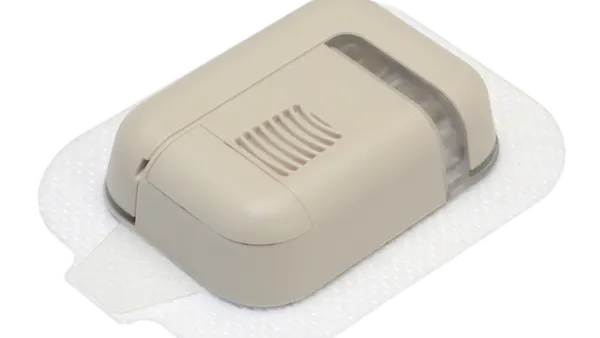
- Abbott has received Food and Drug Administration authorization for a dual-analyte sensor that can measure both glucose and ketones.
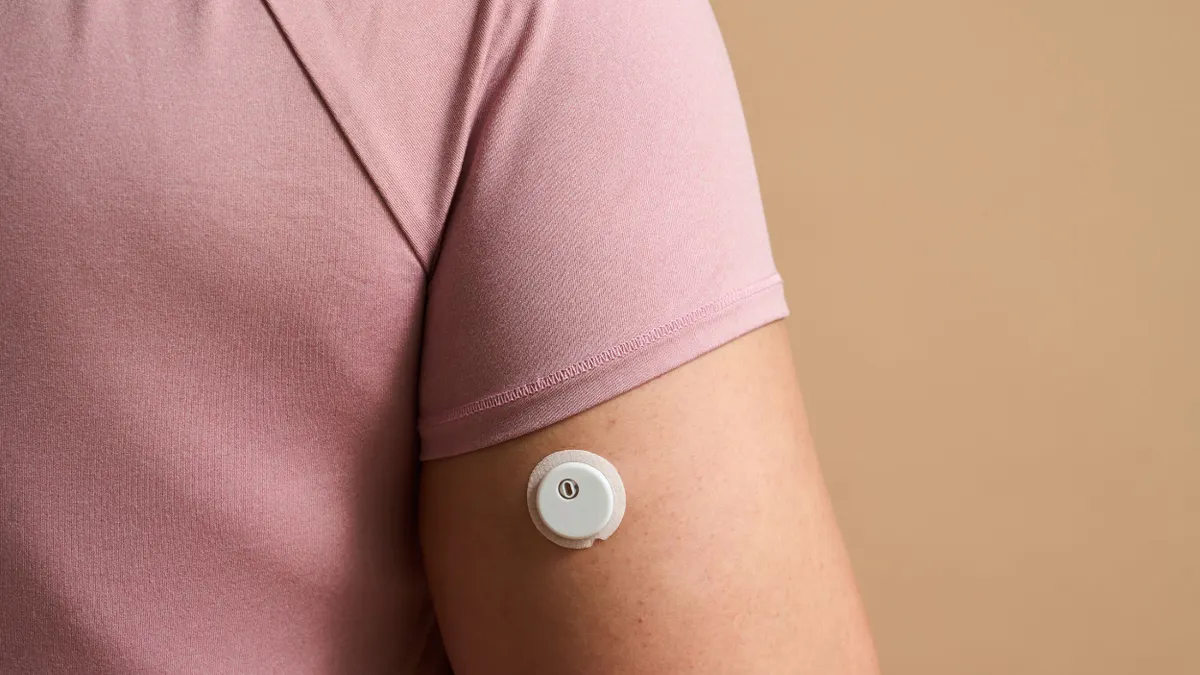
- Abbott announced the de novo authorization on Tuesday after receiving Europe’s CE mark in May. The device can be worn for 10 days by people with diabetes ages two and up, who take insulin or other glucose-lowering medications. The FDA also announced the authorization.
- The system is intended to help people with diabetes avoid diabetic ketoacidosis, or DKA, a serious condition caused by a lack of insulin. Abbott plans to launch the new sensor in the U.S. later this year.
Dive Insight:
Abbott’s new device, called Libre Duo 10 Day, marks a foray into multi-analyte sensing.
The system is designed to continuously track ketones and alert people when levels are rising, and can notify users if ketone levels reach a concerning threshold. By alerting people to action earlier, the goal is to prevent DKA, a condition where the body does not have enough insulin and breaks down fat in the body for energy, causing ketone levels to rise in the blood.
Current guidelines call for people with diabetes to test ketones during illness or periods of elevated glucose. Monitoring with blood or urine ketone tests is the standard of care, but many people do not have these tests at home or rarely use them. Additionally, early signs of rising ketones, such as fatigue, nausea or thirst, can be mistaken for other illnesses.
Alisa Schiffman, senior medical director for Abbott Diabetes Care, told MedTech Dive in a recent interview she hopes the device can help reduce hospital admissions and prevent people from going into DKA if they’re aware of rising ketone levels earlier.
Abbott’s system is unique in that it meets the FDA’s integrated continuous glucose monitoring standard, as well as a new standard for integrated continuous glucose and ketone monitoring, allowing the devices to be paired with automated insulin delivery, or AID systems.
The FDA said it authorized Abbott’s device following a review of six clinical studies that enrolled more than 600 people ages two and older to evaluate its accuracy for glucose and ketone monitoring. The results showed that Libre Duo was able to track clinically meaningful differences in ketone levels over its 10-day wear period and elevated ketones before the onset of DKA.
Abbott expects Libre Duo 10 Day will be compatible with Beta Bionics’ iLet and Sequel Med Tech’s twiist AID systems by the end of the year. The company is also working on integrations with Insulet, Tandem Diabetes Care and MiniMed for 2027, including a partnership where Abbott makes a version of its dual-analyte sensor designed to integrate exclusively with MiniMed’s systems. The devices will work with Abbott’s existing Libre app.
Experts interviewed by MedTech Dive raised questions about what the cost will be for Libre Duo 10 Day, and what insurance coverage will look like. Abbott has not shared the details yet, but Schiffman said earlier this month that the company plans to work with insurance companies and payers, emphasizing that the company has always tried to make its devices accessible to patients.