Dive Brief:
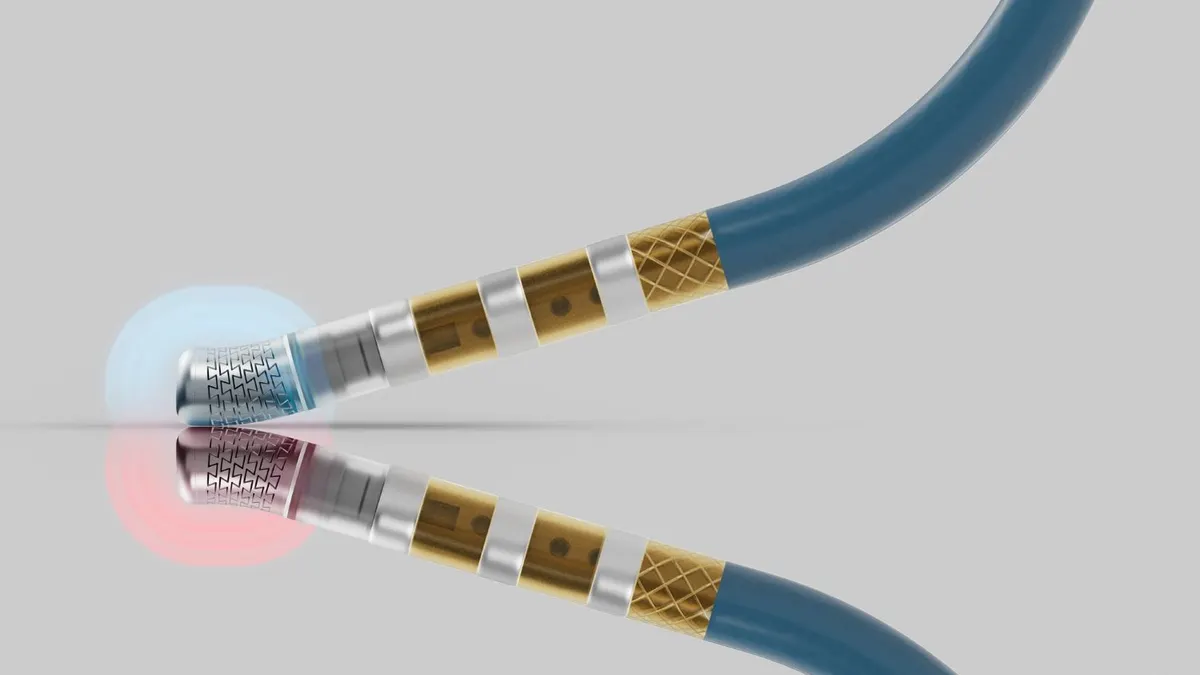
- Abbott said Tuesday it received Food and Drug Administration approval for the TactiFlex Duo catheter that offers pulsed field ablation and radiofrequency energy in one device to treat atrial fibrillation. Physicians can switch between energy modes to tailor the patient’s treatment.
- The device, which received Europe’s CE mark at the beginning of this year, is expected to help Abbott accelerate its sales growth in the electrophysiology market in the second half, CEO Robert Ford said in July.
- The U.S. approval comes shortly after Abbott presented results of the FlexPulse IDE study at the European Society of Cardiology Congress in late August. The data showed TactiFlex Duo was safe and effective in patients with paroxysmal AFib, characterized by occasional episodes of the irregular heart rhythm.
Dive Insight:
AFib, the most common type of heart arrhythmia, increases a person’s risk for blood clots that can lead to a stroke. Treatment for paroxysmal AFib can stop the problem from progressing to longer episodes.
RF ablation delivers heat energy to targeted areas of the heart to create lesions that block the abnormal electrical signals that cause AFib, while PFA uses electrical pulses to form the scars. PFA, which can limit the risk of injury to surrounding tissue, has gained rapid adoption in recent years as companies including Boston Scientific, Medtronic, Johnson & Johnson and Abbott have introduced new systems.
Abbott, which introduced its next-generation Volt PFA catheter in the U.S. in May, is expecting both Volt and TactiFlex to help the company regain electrophysiology market share and grow sales at a rate above the market, Ford said on a July earnings call. Volt gained U.S. and European approvals in 2025.
Abbott said it will begin cases with TactiFlex Duo across the U.S. in the coming weeks.