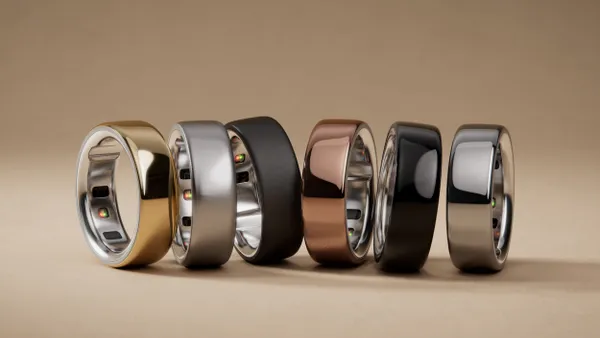
Oura last week shared a glimpse of its finances ahead of a planned initial public offering. The maker of a wearable ring has not yet disclosed how much it plans to raise in the offering, but The Wall Street Journal reported last month that Oura could be valued at well over $11 billion.
Here are some key numbers from Oura’s prospectus to watch in its IPO.
1. Oura’s blood pressure study
One of the big questions facing Oura, and other wearable companies, is whether it will develop features that the Food and Drug Administration and other regulatory bodies consider medical devices. Currently, all of Oura’s features fall under the FDA’s wellness exemption, but the company has partnered with medtech firms, including Dexcom and Resmed, and last year received FDA authorization to launch a blood pressure study. Oura said the study will evaluate an algorithm to generate blood pressure insights.
Following a change to how the FDA regulates wellness features, Oura said it planned to offer a tool to track nighttime blood pressure trends under the FDA’s wellness exemption. The study is for a separate, regulated feature intended to surface hidden hypertension risk.
“As we continue to develop and expand the features and capabilities of the Oura Ring and Oura App, we expect that additional features and functionalities that we may introduce will be subject to regulation by the FDA and comparable regulatory authorities as medical devices,” Oura wrote in its prospectus.
In the European Union, wellness features are not regulated as medical devices, but the decision as to whether a software feature falls within the scope of this regulation is made on a case-by-case basis by authorities in each member state.
Oura is also watching if competitors receive regulatory authorization, which could give them an advantage.
2. Oura’s revenue is growing
Oura’s revenue and income have increased in the last three years, although the company cautioned in its prospectus that it only recently attained profitability. The company reported net income of $60.8 million in the nine months ending June 30, while in the year-ago period, Oura’s net income was $1.6 million.
A large portion of Oura’s sales come from a few retailers, including Amazon, Best Buy and Target. Oura also sells the rings to corporate and enterprise partners, including the U.S. Department of Defense.
Oura does not have its own manufacturing facilities, but relies on contract manufacturers to assemble the final product, and third-party suppliers for components.
3. The cost of Oura’s products
Oura called out economic conditions as a factor that could affect its business. Its smart ring is priced as a “premium consumer device,” and unfavorable economic conditions could lead people to delay or reduce purchases of the company’s products and services, according to its prospectus.
Oura also said trade uncertainty and tariffs could affect its business.
4. Oura memberships grow with smart ring sales
Paid memberships make up roughly a fifth of Oura’s total revenue. As of June 30, 2026, Oura had 5 million paid members and had sold 3.1 million rings in the current fiscal year.
The company said that the vast majority of customers (94%) convert to a paid membership after buying a ring. As a result, paid memberships have grown with ring sales.
5. Oura’s sleep claims
This number is at the heart of a proposed class action lawsuit filed against the company last month. The complaint, filed in the Northern District of California, said Oura’s ability to measure the different stages of sleep is no better than “a coin flip.”
Oura acknowledged the potential for class action litigation in its prospectus.
“We may face additional claims, lawsuits, or regulatory inquiries of a similar nature in the future, including as a result of publicity relating to this action,” the prospectus stated.