Dive Brief:
- Boston Scientific said Tuesday a pivotal study of its coronary intravascular lithotripsy catheter to treat severely calcified coronary artery disease met its primary safety and effectiveness endpoints.
- The data, presented at the EuroPCR 2026 conference in Paris, showed a 93.3% rate of freedom from major adverse cardiac events at 30 days, exceeding the primary safety goal of 86.2%. The device demonstrated 93.7% procedural success, defined as stent delivery with residual stenosis of less than 50% and no major adverse events during the hospital stay, exceeding the 85.8% goal.
- Boston Scientific said the study results will support its regulatory submission for the Seismiq 4CE catheter to address severe calcium during the lesion preparation phase of percutaneous coronary interventions to open blocked arteries.
Dive Insight:
Boston Scientific acquired the Seismiq IVL technology when it bought Bolt Medical in 2025, paying up to $664 million for the 74% of the company it did not already own.
Boston Scientific initially developed the concept for the Bolt IVL system, helping to establish the company in 2019, and held an equity stake of about 26%.
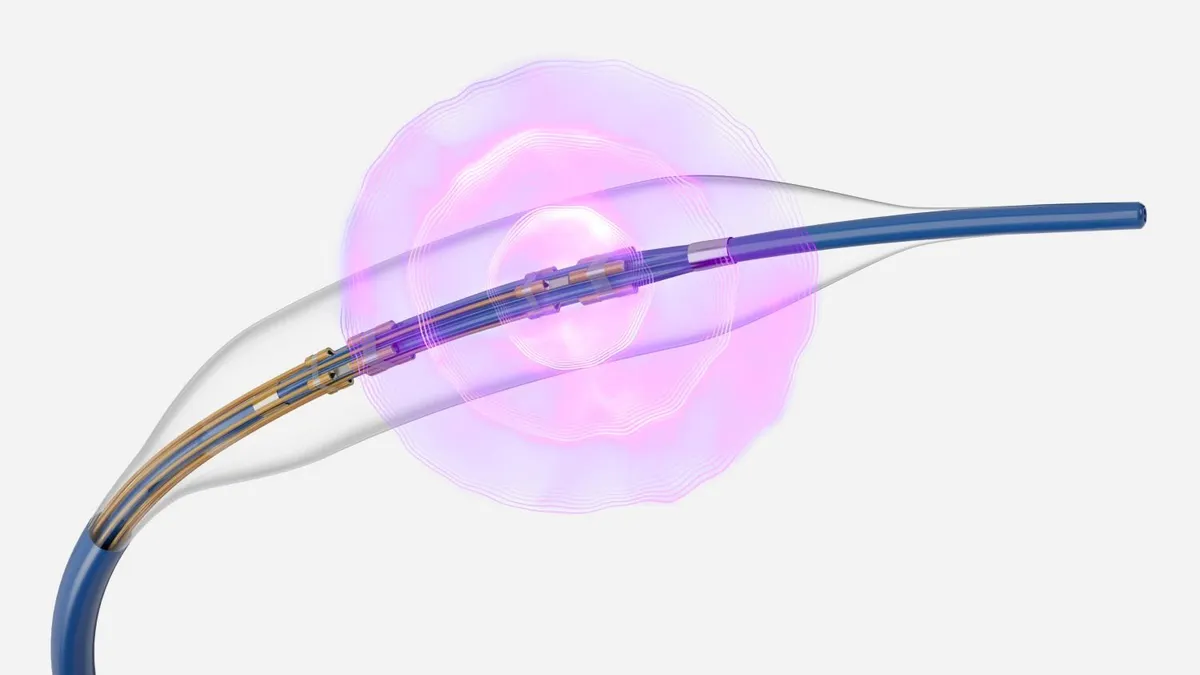
The Seismiq 4CE device uses laser energy within a balloon catheter to generate acoustic pressure waves that fracture hardened calcium deposits. The system is designed to deliver energy at low pressure to break up the calcium and prepare the vessel for stent implantation and maximum stent expansion to restore blood flow.
Moderate to severe calcification that can narrow coronary arteries is present in nearly a third of patients who receive PCI for coronary artery disease, the company said.
The single-arm FRACTURE trial enrolled 420 patients with severe CAD. Stents were successfully delivered in all patients treated, no deaths occurred and one patient underwent target vessel revascularization at the 30-day follow-up, said Margaret McEntegart, co-principal investigator of the study.
"As the prevalence of coronary artery disease and adoption of IVL therapy to address it continue to grow rapidly, data from this important trial will help advance our understanding of treatment for severely diseased, previously untreated coronary lesions and could help broaden the scope of coronary IVL treatment options over time," McEntegart said in a Boston Scientific statement.
Patients in the study will be followed for two years after their procedure across 46 sites in the United States and Europe.
The coronary IVL catheter is compatible with the same console used with the Seismiq IVL peripheral catheter, which received Food and Drug Administration clearance in 2025 to treat patients with severely calcified peripheral artery disease.