Dive Brief:
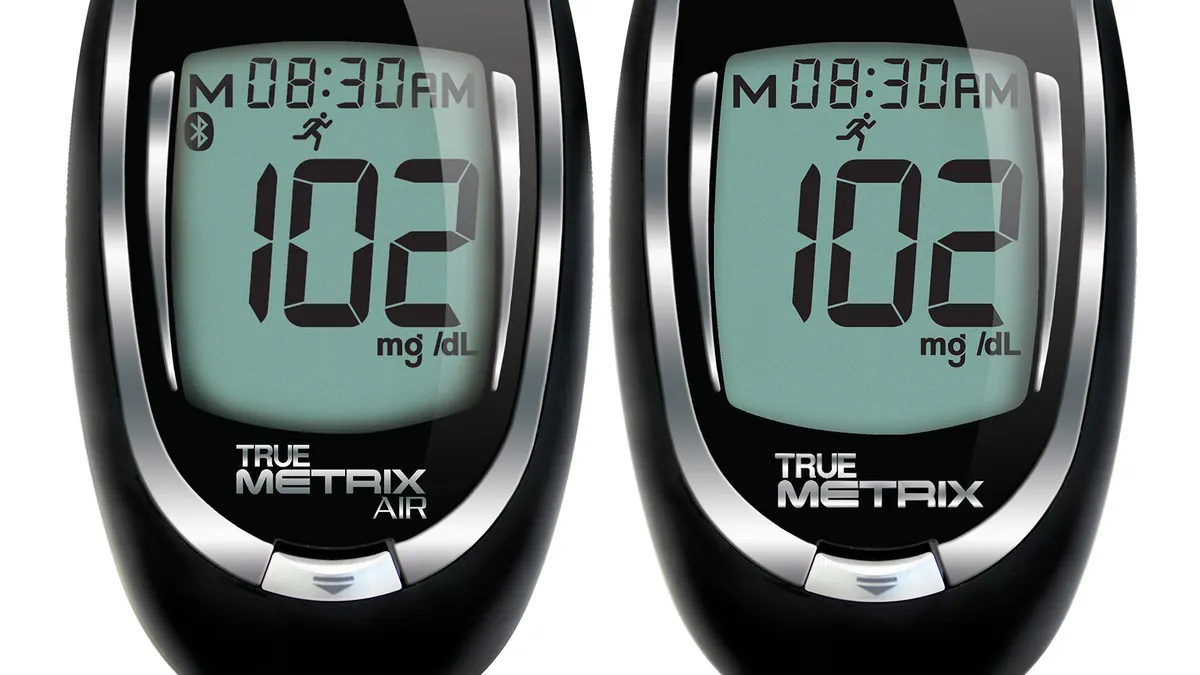
- The Food and Drug Administration has recommended that users of Trividia Health’s True Metrix devices switch to other methods of testing their blood glucose.
- Officials made the recommendation on Tuesday because the devices show the same error code when a patient has very high blood glucose or when there is a problem with the test strip.
- Trividia has recalled millions of owners’ booklets and systems instruction documents in response to the problem. The meter, test strips and control solution remain on the market.
Dive Insight:
Trividia’s recall affects co-branded products that the company sells with partners including CVS, Henry Schein, Kroger, McKesson, Rite Aid and Walgreens.
Trividia wrote to customers in February about a correction to the labeling of its True Metrix devices. The update added a warning to the section about E-5 error codes, advising users who receive the error to retest with a new test strip. By the time Trividia contacted customers, users had reported 114 serious injuries and one death associated with the error code.
The FDA, which published an early alert about the recall in February, provided additional information this week. The agency’s safety communication included the recommendation that users transition to other blood glucose testing methods.
It is especially important that high-risk users switch to an alternative glucose monitoring system, the FDA said. The agency named patients receiving intensive insulin therapy or sulfonylureas, or who frequently have hyper- and hypoglycemic events, as high-risk users. People who keep using a True Metrix device until they can access an alternative should follow the updated recommendations, the FDA said.
The recommendation to use alternative blood glucose tests reflects the risks of misinterpreting the error code. A user who receives the error code because they have very high blood glucose may think a test strip problem triggered the error, delaying treatment. Equally, a user may falsely believe they have very high blood glucose when the test strip is at fault, leading to improper treatment.