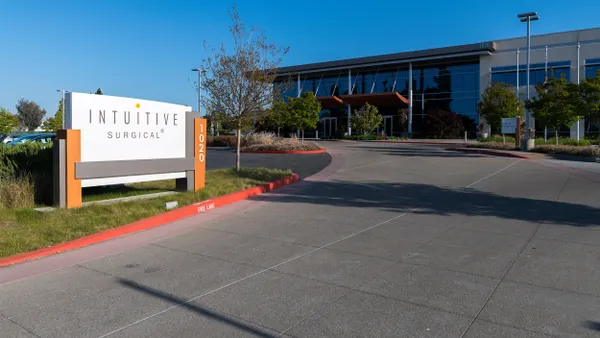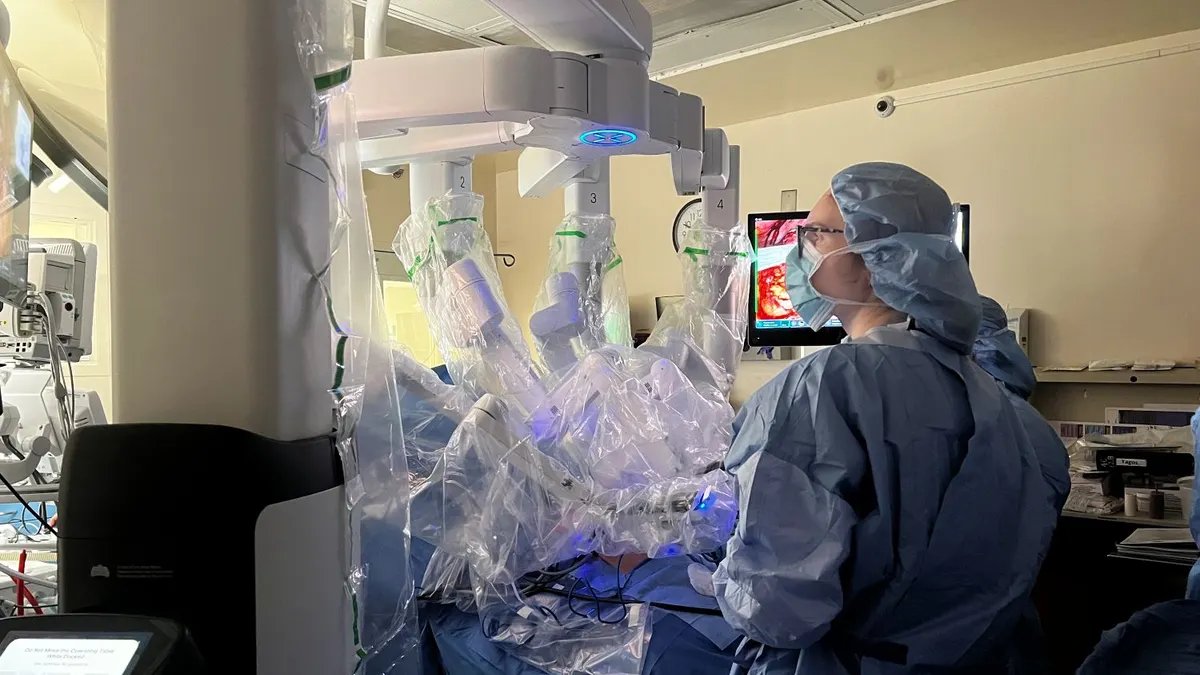
Intuitive on Thursday said growth in the number of U.S. procedures performed with its da Vinci surgical robots softened in the second quarter due in part to the expiration of enhanced Affordable Care Act premium subsidies.
The enhanced marketplace subsidies expired at the end of 2025, and Congress did not extend them, prompting enrollment declines and shifts to higher-deductible policies.
“In our customer conversations, some have said that changes in patient coverage and premium dynamics may be affecting when patients seek care and move forward with treatment,” CEO Dave Rosa said on Intuitive’s earnings call.
Shares fell 12%, to $354.26, in Friday morning trading.
Da Vinci procedure growth was 12% in the U.S. Growth moderated from recent trends and from the company’s expectations when the year started, Rosa said. The slowdown was seen primarily in procedures that can be deferred.
Outside the U.S., da Vinci procedures grew 20%.
Despite the sluggish U.S. procedure volume, Rosa said system placements were strong, reflecting continued demand for Intuitive’s newer da Vinci 5 platform. The company reiterated its forecast for worldwide 2026 da Vinci procedure growth of about 13.5% to 15.5%, predicting it will be closer to the midpoint of the range.
Citi Research analyst Joanne Wuensch called the outlook “tricky” in a report to clients, noting prior concerns about the impact of ACA subsidy cuts have now materialized.
“While the update was somewhat tempered by continued strength in the global capital purchasing environment and several updates on the pipeline, it will likely weigh on [Intuitive’s] shares (at least near term),” Wuensch wrote.
Projects in the pipeline
Intuitive has submitted “multiple innovations” for Food and Drug Administration clearance, including a flexible robotic endoscope system for use in the gastrointestinal tract, Rosa said. The company has submitted a 510(k) application for a noncommercial version of the device. Other, early-stage R&D programs at the company are targeting new disease states.
Intuitive also recently received regulatory clearance for the da Vinci 5 robot in India.
The robotic surgery leader, which helped create the market more than two decades ago, is now contending with competition from companies launching new systems, including Medtronic, CMR Surgical, Distalmotion and Moon Surgical.
New market entrants in the U.S. are looking to make in-roads at ambulatory surgery centers, which traditionally have lacked robotic surgery programs.
Intuitive executives, on the earnings call, said the company is selling more refurbished older-model da Vinci systems to ASCs in the U.S. and to customers in cost-constrained countries.
Another initiative, aimed at reducing procedure costs, is focused on extending the life of certain instruments used with its systems.
CFO Jamie Samath highlighted cardiac and nipple-sparing mastectomy procedures as promising long-term opportunities that are now in early stages. Procedure growth in both markets accelerated sharply in the second quarter, he said. The company is investing in development of cardiac-specific instruments as well as more clinical evidence to support the mastectomy procedure.
Overall, Intuitive maintains a dominant competitive position with little sign of erosion, said BTIG analyst Ryan Zimmerman in a note after the call.
“Emerging opportunities in cardiac, GI, and the ASC setting represent compelling incremental growth vectors, and we continue to view the current procedure softness as transitory rather than a signal of structural demand deterioration,” the analyst said.