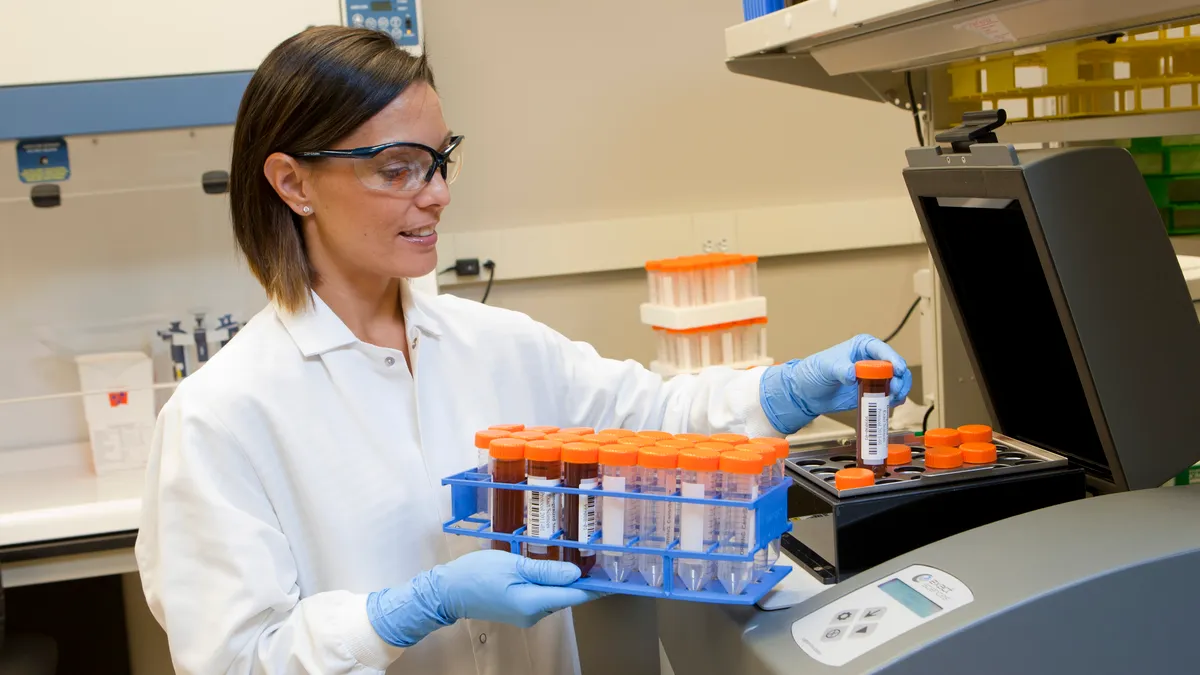
In Abbott’s first full quarter since buying Exact Sciences for $21 billion, the company reported more than 40% year-over-year sales growth for its diagnostics business in the second quarter.
Sales of Cologuard, Exact’s colorectal cancer screening test, grew in the mid-teens in the quarter. CEO Robert Ford told investors on an earnings call that he expects the business to grow faster in the second half of the year, driven by recently launched tests, continued international adoption, and care gap programs where screening kits are provided to people who are overdue for colorectal cancer screening.
Abbott’s cancer diagnostics segment, which includes Exact Sciences, reported sales of $919 million in the quarter, a roughly 13% comparable increase over the year-ago period. Most of the increase was driven by Cologuard.
Overall, the diagnostics business generated $3.09 billion in revenue, representing year-over-year growth of 42%.
Ford also expects a benefit from the launch of Exact’s newest version of the test, called Cologuard Plus. The rollout for the test began in March.
While stool-based colorectal cancer screening tests, such as Exact’s Cologuard, are preferred over blood-based cancer screening tests, according to the American Cancer Society’s latest guidelines, Abbott has also taken an interest in the liquid biopsy market. The company is developing its own blood-based cancer screening test and has partnered with Freenome to market its blood-based colorectal cancer test.
“The ability to add a blood test to the portfolio is going to be, I think, extremely attractive for us,” Ford said.
While blood tests are a little more convenient, they are not as sensitive in detecting precancerous polyps and earlier stage cancers as current stool-based tests, the CEO said. So, Cologuard would be recommended to patients first.
Ford said Abbott will be well positioned as the only company to offer both stool- and blood-based tests.
Abbott’s stock increased by nearly 11% to $99.04 in afternoon trading Thursday.
New medical devices on the horizon
Outside of diagnostics, Abbott is looking to new medical devices to drive growth in its other segments. Ford said the company plans a launch of new products “in a steady cadence over the next 12 months.”
Abbott has submitted its Amulet 360 left atrial appendage occlusion device, an implant intended to reduce the risk of stroke in people with atrial fibrillation, to the Food and Drug Administration for approval, Ford said.
In May, the company launched the newest version of its Volt pulsed field ablation catheter, used to treat AFib, and Abbott plans to shift from a U.S. limited market release to a full market release in the third quarter.
Abbott this spring also received Europe’s CE mark for the first dual glucose-ketone sensor for people with diabetes. The company plans an international rollout of the device this fall.