Dive Brief:
- Johnson & Johnson said last week that it has started pivotal development of a Shockwave Medical device for treating calcified carotid arteries.
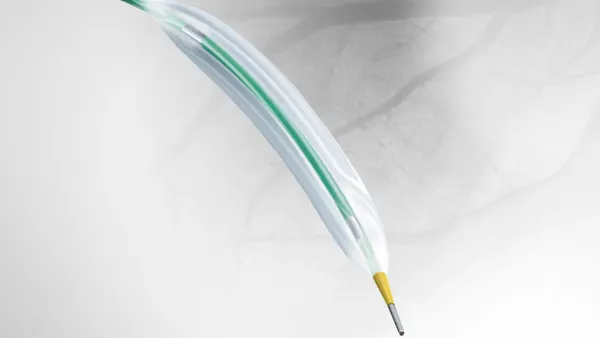
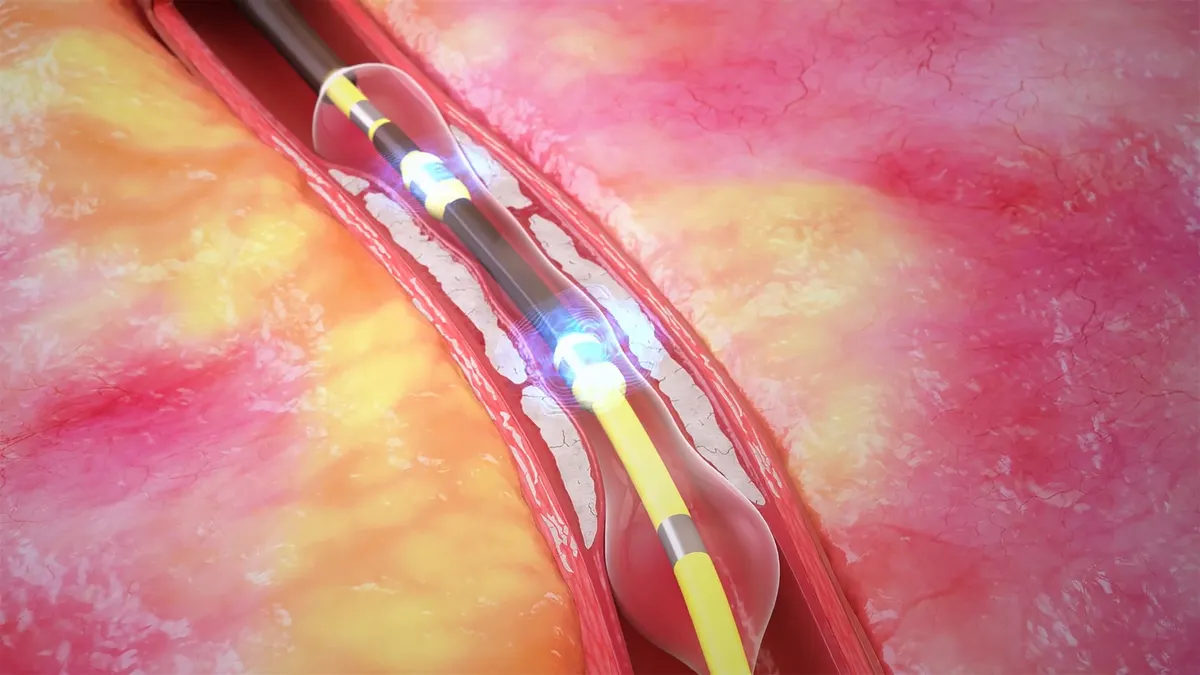
- J&J designed the investigational device, called SkyRunner, to repurpose Shockwave’s intravascular lithotripsy technology for breaking up calcium in the carotid artery.
- A physician in Michigan recently treated the first patient in the investigational device exemption clinical program for SkyRunner.
Dive Insight:
Shockwave is built on technology for delivering acoustic energy to break up calcium in coronary and peripheral arteries. By the time J&J acquired Shockwave for $13.1 billion in 2024, the company was working to expand the use of the IVL technology to carotid arteries and structural heart disease.
Carotid artery disease is defined by the accumulation of plaque in vessels that supply blood to the brain. As the plaque hardens, the arteries can become narrowed or blocked, reducing blood flow and raising the risk of stroke.
Treatments include carotid endarterectomy, a surgical operation that removes plaque from the carotid arteries. However, surgical and endovascular treatments can be technically complex and are associated with increased procedural risk, J&J said. Treatment options for patients deemed too high risk for carotid endarterectomy are limited.
SkyRunner could expand treatment options by removing calcium to prepare carotid arteries for stenting. Physicians have used Shockwave's existing products off-label to modify calcification before placing stents in carotid arteries. J&J optimized SkyRunner for the carotid artery’s anatomy by developing vessel-specific sizing and shaft lengths suitable for transcarotid and transfemoral approaches.
The pivotal program features two trials, one transcarotid and one transfemoral. Each trial is enrolling up to 160 patients who are at high risk for complications from carotid endarterectomy. The trials will assess the use of SkyRunner prior to stenting.
Both trials are using a composite assessment of death, stroke and myocardial infarction as the primary endpoint. J&J’s secondary endpoints are assessing stent delivery, incidence of stroke up to 60 months post-procedure and other outcomes. The studies have late-2027 primary completion dates on the federal clinical trials databases, although both are forecast to continue through 2032 to collect long-term data.
J&J is working to expand use of Shockwave’s technology as competition for its core indications emerges. Boston Scientific, which acquired IVL technology last year in a $664 million deal for Bolt Medical, posted data in coronary artery disease last month. The company plans to use the data to seek approvals.
Stryker also recently entered the IVL competition this year with its acquisition of Amplitude Vascular Systems.