Dive Brief:
- Medtronic on Wednesday said two analyses of its Symplicity Spyral renal denervation system, presented as abstracts at the EuroPCR meeting in Paris, showed the procedure significantly reduced blood pressure in patients over three years.
- Outcomes after renal denervation for 787 patients who had prior cardiovascular events were evaluated in one study, while the second followed 903 people with severe hypertension.
- The analyses, from the global SYMPLICITY registry, add to a growing body of evidence supporting renal denervation, Medtronic said.
Dive Insight:
Patients with high blood pressure generally are prescribed antihypertensive medications and advised to make lifestyle changes. Renal denervation offers a new, device-based option for people with hypertension.
The Medtronic procedure, along with Recor Medical’s Paradise renal denervation system, received Food and Drug Administration approval in late 2023 to treat drug-resistant hypertension, a widespread condition that raises the risk of heart disease and stroke. The Centers for Medicare and Medicaid Services supported use of the treatments with a national coverage determination last year.
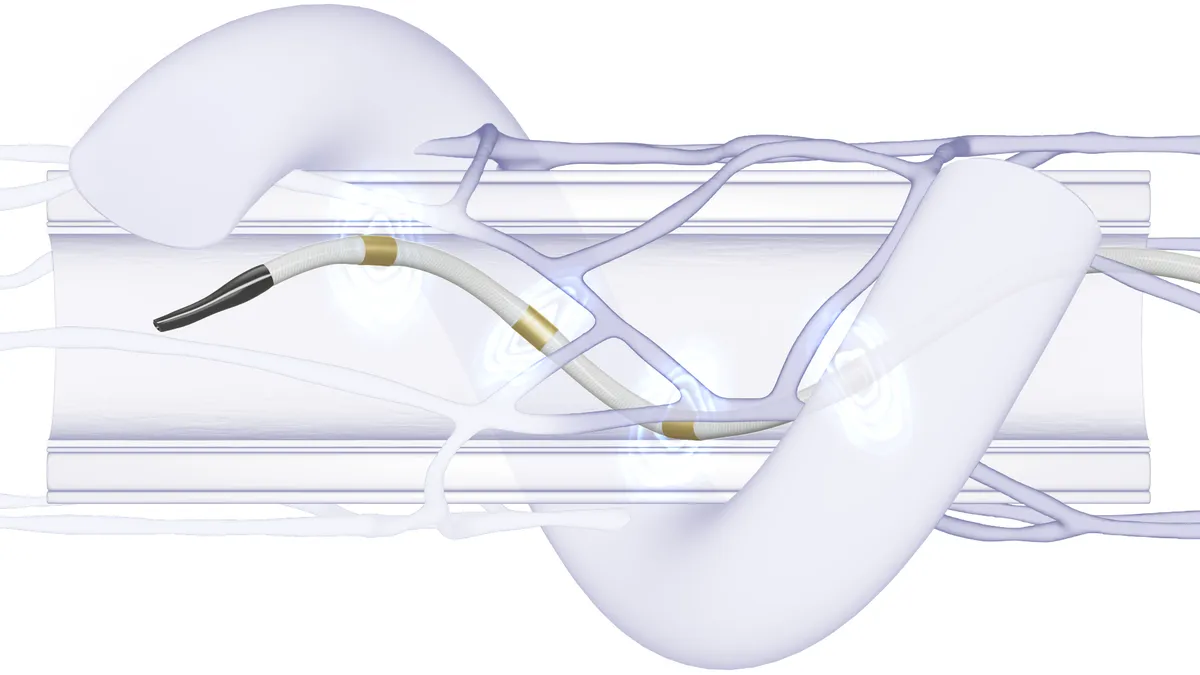
The catheter-based procedure uses energy pulses to ablate nerves near the renal arteries to lower blood pressure.
Medtronic said lowering blood pressure can reduce repeat cardiovascular events. The first SYMPLICITY registry analysis, assessing patients with prior cardiovascular events, showed a change in office systolic blood pressure of -17.4 ± 28.4 mmHg, compared with baseline. The 24-hour ambulatory blood pressure measurement was -9.9 ± 21.5 mmHg, compared with baseline.
The number of antihypertensive medications did not increase at three years. Adverse event rates were 8.6% for death, 5.1% for cardiovascular death, 4.9% for heart attack, 7.2% for stroke, 6.1% for hospitalization for new onset heart failure and 4.6% for hospitalization for hypertensive emergency. There were no safety events.
Medtronic said patients with severe hypertension require more intensive treatment and face elevated cardiovascular risk. The registry analysis of three-year outcomes in this group found patients had significant and sustained reductions in office systolic blood pressure (-40 ± 28.9 mmHg compared with baseline) and 24-hour ambulatory blood pressure (-16.3 ± 26.1 mmHg compared with baseline).
Adverse event rates were 7.5% for death, 3.8% for cardiovascular death, 2.3% for heart attack, 8.4% for stroke, 3.9% for hospitalization for new onset heart failure and 5.1% for hospitalization for hypertensive emergency. The number of antihypertensive medications did not increase, and there were no safety events.
Medtronic is building a market for renal denervation and expects Symplicity Spyral to be one of its bigger future growth drivers. The system is approved for commercial use in about 80 countries.