Dive Brief:
- Precision Neuroscience said Thursday it has raised $250 million to develop its brain-computer interface and build commercialization infrastructure.
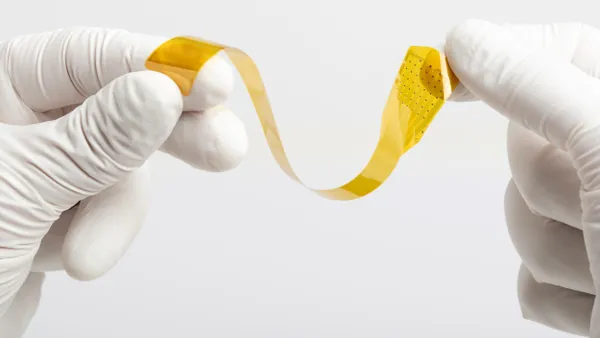
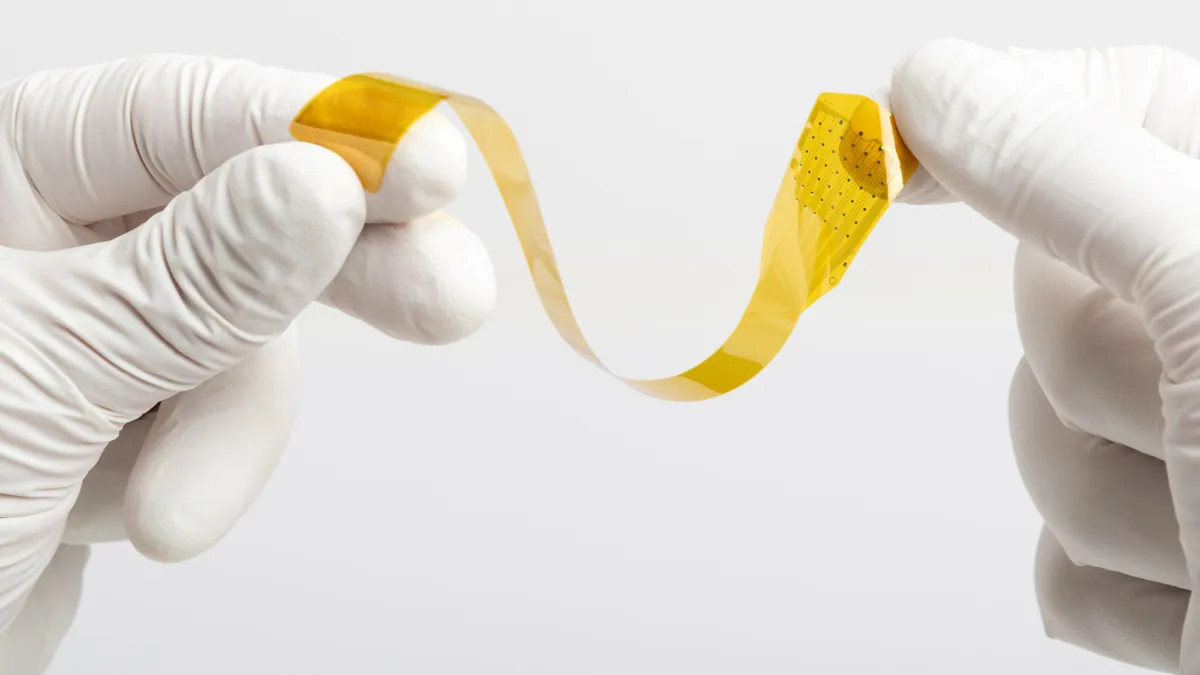
- The Medtronic-partnered company has created an electrode array that records and stimulates the brain. The device, called Layer 7, turns brain signals into commands for digital devices.
- Precision Neuroscience’s Series D financing round is part of a surge in investment in BCI startups, which has seen Science Corporation raise $230 million and Merge Labs secure $252 million.
Dive Insight:
Companies have various approaches to interfacing with the brain, differentiated, in part, by how invasive their technologies are. While Elon Musk’s Neuralink is developing electrodes that connect to the brain, Precision Neuroscience has created a thin, flexible BCI that sits on the organ’s surface.
Precision Neuroscience’s Layer 7 is thinner than a human hair and features 1,024 electrodes on a device the size of a postage stamp. The design allows surgeons to implant the cortical interface via a “micro-slit incision technique.” Precision Neuroscience received Food and Drug Administration clearance for 30-day use of the device last year.
The Series D round, which brings Precision Neuroscience’s total funding to $430 million, positions the company to expand its clinical program, advance Layer 7 through the next stages of FDA review and build commercialization infrastructure.
Pershing Square, the Ackman Oxman Institute and an undisclosed life sciences investment fund co-led the financing round. Investor Bill Ackman, CEO of Pershing Square and co-founder of the Ackman Oxman Institute brain research center, is a key figure in the financing.
“Neurotechnology will be central to the next generation of cures, treatments and rehabilitation,” Ackman said in a statement.