Dive Brief:
- The Food and Drug Administration on Friday issued a discussion paper on robotic medical devices with autonomous or remote teleoperation capabilities and is requesting feedback on the systems’ benefits and risks.
- Autonomous and remote capabilities bring complexity to the benefit-risk consideration, the FDA said. The agency wants input on factors including technical considerations, terminology, risk mitigation and how to develop policy that is responsive to innovation while maintaining device safety and effectiveness.
- The FDA is asking the robotics community to submit comments on the discussion paper by Jan. 5. Ahead of that deadline, a public workshop to discuss the topics raised in the paper is scheduled for Dec. 2-3.
Dive Insight:
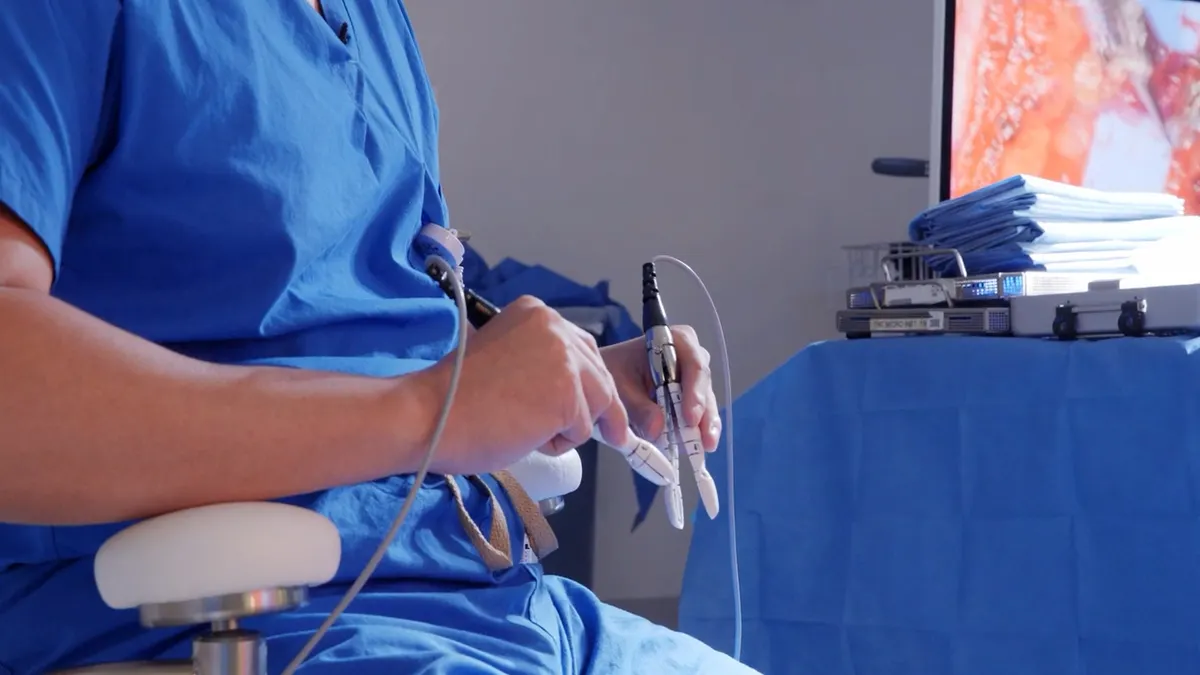
Telesurgery, where the surgeon operates from a console in a different location than the patient, is increasingly being performed in countries such as China and India. In the U.S., no remotely teleoperated or fully autonomous robotic devices have received marketing authorization as of July, the FDA said.
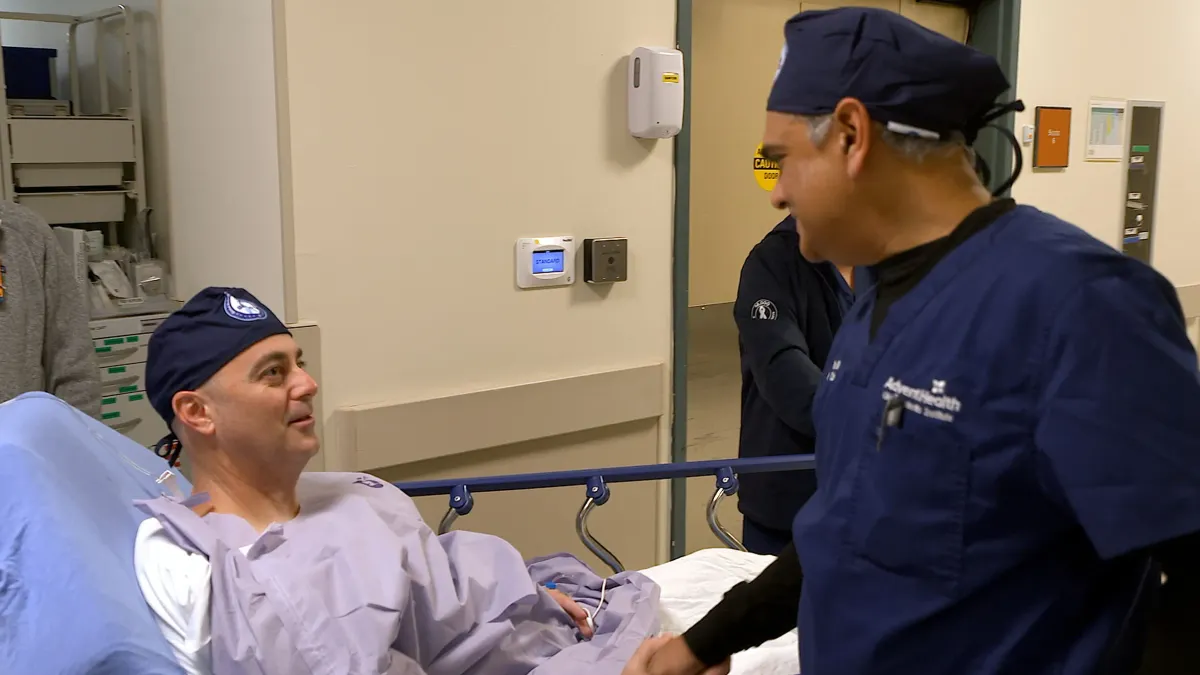
Under an investigational device exemption from the FDA, Dr. Vipul Patel, founder and medical director of the Global Robotics Institute at AdventHealth Celebration in Florida, in October performed a robotic prostatectomy on a patient about 35 miles away. Last year, Patel completed a transatlantic prostatectomy, operating from Florida on a patient in Angola.
In another example of teleoperation, manufacturers are developing devices that enable technicians to remotely perform ultrasounds, the FDA said. Robotic devices include stereotactic navigation systems, imaging devices and endoluminal navigation devices.
The FDA said manufacturers are also exploring use of autonomous functions in systems where an individual has directed the robot to perform the task or procedure, rather than controlling the device and performing the procedure from a remote location. Autonomous capabilities could include obtaining a blood draw without a phlebotomist and finding or stopping life-threatening bleeding inside the body.
Rapid advances in artificial intelligence, machine learning and connectivity are driving expansion of robotic applications in a wide range of clinical settings, the FDA said. Increases in processing power, data storage and computational efficiency are enabling progress in robotic systems with autonomous capabilities.
Factors in a benefit-risk consideration could include procedural complexity, repeatability, degree of clinical expertise across care settings and impact of autonomous functionality on patient outcomes, the agency said.
Incorporating autonomy into robotic systems could support procedural accuracy, reproducibility or workflow efficiency and potentially improve clinical outcomes, the FDA said. However, distinct risks such as incorrect autonomous execution, reduced user vigilance and limited adaptability to procedural variability may accompany the potential benefits.