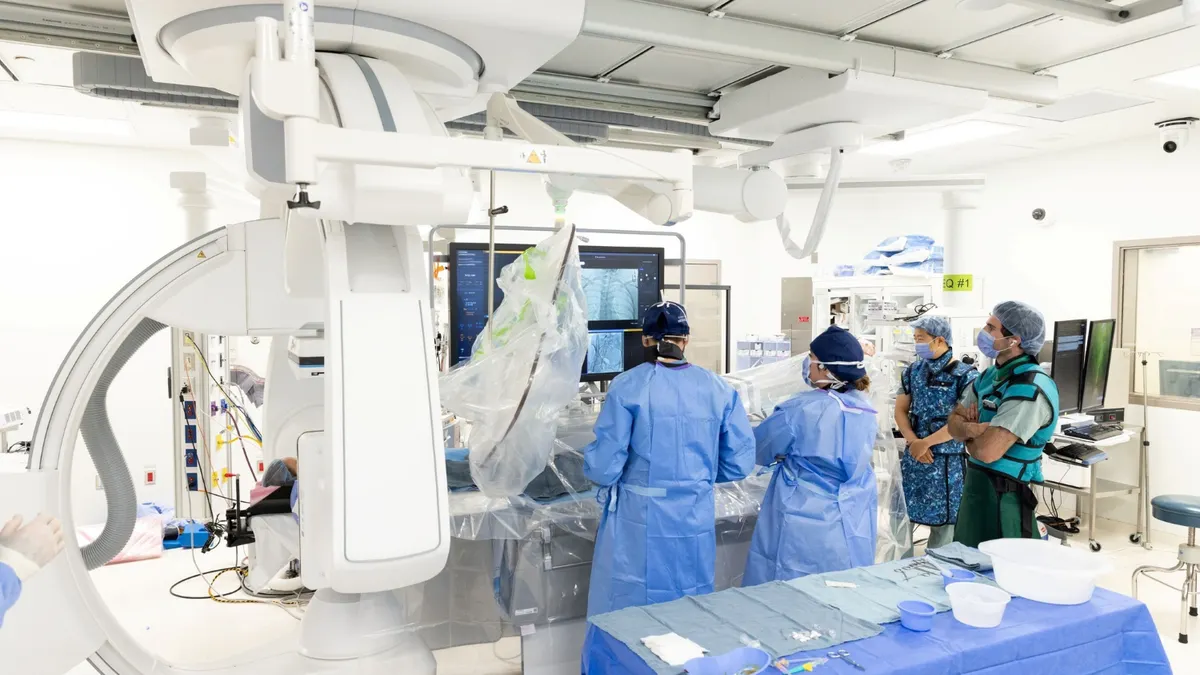
Remedy Robotics, a San Francisco-based startup developing robotic systems for cardiovascular and endovascular treatments, said it raised $62 million in a new funding round.
The financing will support a planned pivotal trial in partnership with the University of California, with the aim of advancing toward Food and Drug Administration approval for neurovascular intervention.
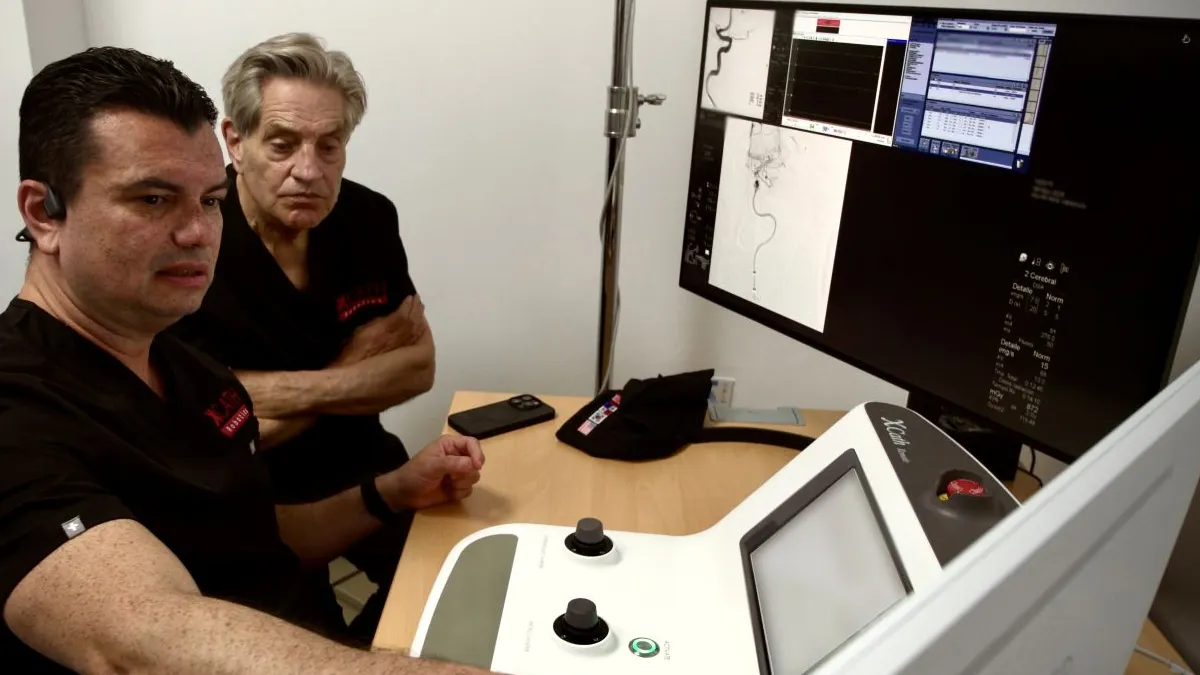
Remedy said it is finalizing development of its N1 system designed for on-site, remote or autonomous operation. The artificial intelligence-enabled robotic platform uses machine learning to analyze preoperative imaging, simulate cases in advance, provide real-time image registration and complete endovascular procedures.
The company believes its system has the potential to expand access to and improve the quality of specialized neurovascular, coronary and peripheral vascular care. Remedy said it now works with more than 100 hospitals worldwide. In October 2025, the company announced it successfully completed remote neurointerventional procedures with the N1 system.
Venture capital firm DCVC led the Series B funding round. New investors included UC Investments, the University of California's investment arm, Skip Capital and Australian pension fund Hostplus.
Capstan robot completes first U.S. case
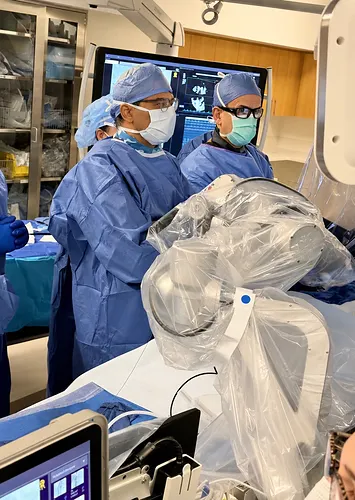
Capstan Medical said the first U.S. transcatheter mitral valve replacement was performed with its investigational robot.
The procedure, on Nov. 9 at The Christ Hospital in Cincinnati, was part of an FDA-authorized early feasibility study. The patient was discharged in stable condition, Dr. Santiago Garcia, director of the hospital’s structural heart program, said in a statement.
While transcatheter aortic valve replacement is a major business for companies such as Edwards Lifesciences and Medtronic, TMVR has been slower to develop due to the mitral valve’s complex anatomy. Abbott, Edwards and Medtronic offer various mitral valve repair and replacement technologies.
Capstan’s Compass robotic system is intended to provide catheter stability and control for precise positioning of the mitral valve implant in a TMVR procedure. The technology combines a flexible multi-axis catheter, robotic navigation and a novel valve implant. Physicians direct catheter movement, valve positioning and deployment via a handheld controller.
“This technology has the potential to fundamentally change what is possible for patients who cannot undergo conventional heart surgery, which remains an important unmet clinical need," said Garcia, who led the team that performed the procedure.
The milestone follows Capstan's first-in-human robot-assisted mitral valve replacement procedures in Chile, announced in March 2025.
The Santa Cruz, California-based startup raised $110 million in new funding in 2024 to support its clinical trials, with investors including Intuitive.