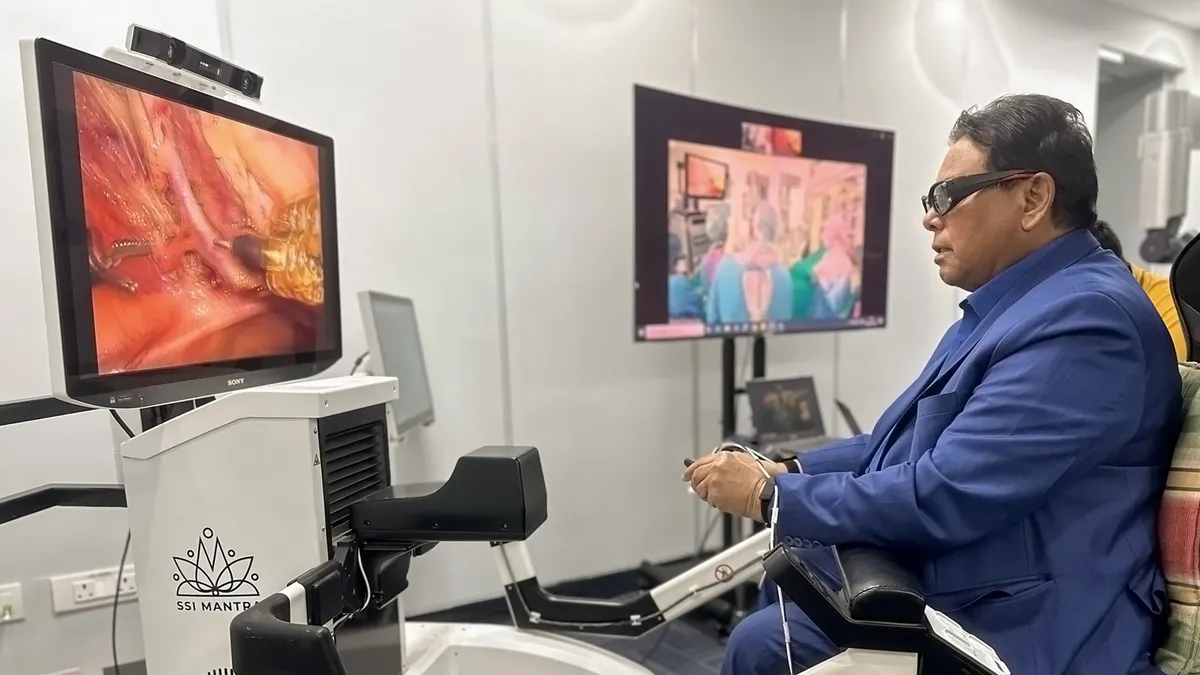
Surgical robot maker SS Innovations International is expanding in telesurgery with approvals in two more global markets.
The company last week said its SSi Mantra system received the go-ahead for use in telesurgery in Indonesia and the Philippines. The robot, already authorized for telesurgery in India, has been used to perform more than 150 remote surgeries.
Advancing remote robotic surgery is a key strategy for SS Innovations, which sees an opportunity for specialist surgeons to treat more patients as the technology removes distance barriers. Over the past several months, telesurgeries performed with its system in India have included gastric bypass, gynecological and cardiac procedures, the company said.
The SSi Mantra system has an installed base in 10 countries, and SS Innovations anticipates receiving approvals in more locations in 2026. A spokesperson said in an email to MedTech Dive that the company will pursue telesurgery authorization in countries where the robot is currently approved and, in parallel, will include telesurgery in new applications going forward.
SS Innovations has applied for its robot to enter the U.S. and European markets and expects to secure Food and Drug Administration clearance and the CE mark this year. “Once we get our CE and FDA approvals we will push for telesurgery in these markets with the [rest of world] experience we would have by then,” the spokesperson wrote.
Earlier this month, SS Innovations raised $18.6 million to support its expansion strategy. Prior to the private placement, the company had cautioned in October that it lacked sufficient resources to fund its operations and business development through the next year.
SS Innovations now has sufficient funding as it navigates the regulatory process in the U.S. and Europe, the spokesperson said, but “may look at some additional capital to accelerate growth and to enter the US market.”
XCath achieves a first in stroke treatment
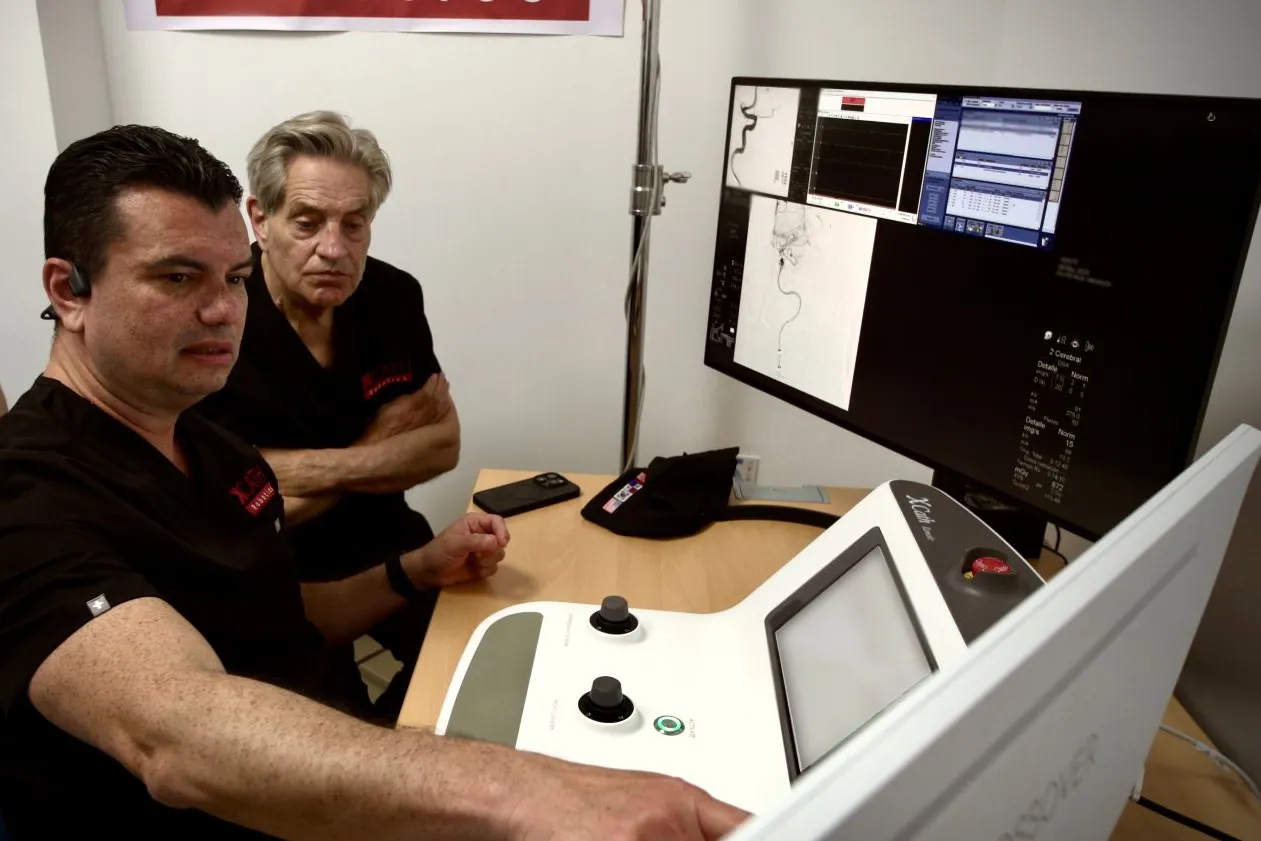
XCath said the first telerobotic stroke procedure was successfully performed using its Iris surgical system.
The remote mechanical thrombectomy was performed by neurosurgeon Vitor Mendes Pereira in Clinica Norte in Santiago, Panama, more than 120 miles from the patient at the Panama Clinic in Panama City. A local neurosurgeon and robotic technologist were with the patient, who is expected to make a complete recovery, XCath said last week.
The company said the long-distance connection showed no perceptible latency during the procedure.
“XCath has accomplished what no other company has achieved in stroke care: a successful remote robotic mechanical thrombectomy delivering lifesaving treatment to a patient that would have otherwise not been able to receive treatment,” XCath Chairman Fred Moll said in a statement. “I believe that the XCath system will help create a new standard of care for stroke patients around the world.”
Mechanical thrombectomy is a procedure to remove a clot blocking a vessel that supplies blood to the brain. The treatment must be performed soon after stroke onset, typically within 24 hours.
The company said there is an urgent need to expand access to mechanical thrombectomy beyond major medical centers.
“The true legacy of this moment will be measured in the millions of lives that could be saved each year as stroke treatment reaches patients who today have no access to it,” said XCath CEO Eduardo Fonseca.
The robot is also being developed to treat brain aneurysm, a bulge in a weakened area of an artery that can lead to stroke.