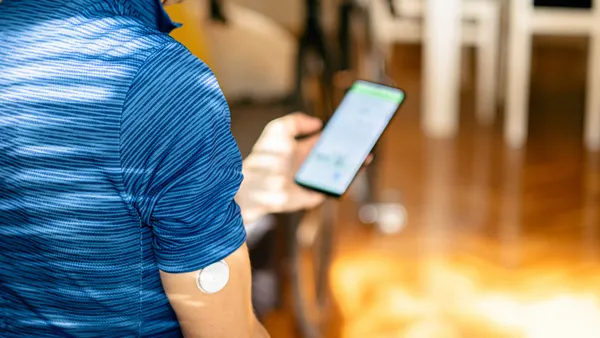

The sleep tracking industry is entering a new phase. For years, organizations have invested in programs expecting insight into recovery, productivity and risk. The wearable devices powering these programs have delivered capable hardware, yet user participation remains the variable that program managers cannot fully control. A 2016 Gartner survey of 9,592 consumers found that 29% of smartwatch owners and 30% of fitness tracker owners stop using the device within six months, with most attrition occurring in the first several weeks. The result is not just incomplete data, but data that reflects the users who remained engaged rather than the full population the program was designed to serve.
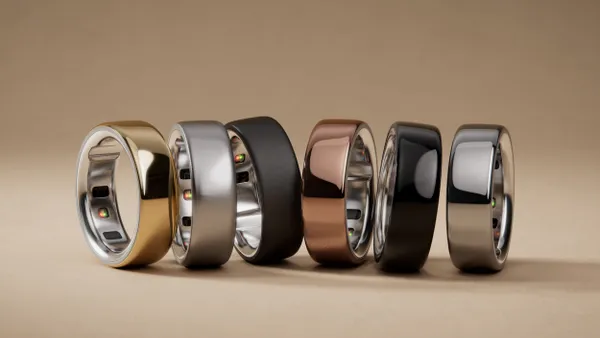
Users set aside devices precisely when schedules compress, travel intensifies or skin irritation makes wrist and ring form factors uncomfortable. The sleepers who would benefit most from consistent tracking are often the least likely to tolerate daily wear. This has created a space in the market that ambient sensing is now positioned to fill. Rather than asking users to remember, charge and tolerate a device, the new wave of hardware moves the sensor into the environment and gathers data passively.
But compliance is only the first layer of the shift. As sleep data moves from personal wellness apps into employer dashboards and risk models, privacy architecture is becoming a procurement issue in its own right. Raw respiration and motion signals are among the most intimate biometric data an employee generates. When wrist-worn devices transmit raw data to cloud servers under vendor-controlled terms, organizations face growing questions around data sovereignty, employee consent and downstream use. Hardware-level controls — local processing, encrypted summaries and circuit-level sensor disconnections — are beginning to appear in procurement checklists alongside accuracy metrics.
Physical tolerance is the second layer. Ring and wrist form factors rely on continuous skin contact, which excludes populations with silicone allergies, metal sensitivities, joint swelling or fragile skin. In workforces with significant representation over age fifty or in health support roles where hand hygiene protocols are strict, wearable adoption rates drop further not because of motivation, but because of biology. Ambient sensing removes the physical barrier entirely: no skin contact, no charging and no form factor to accommodate.
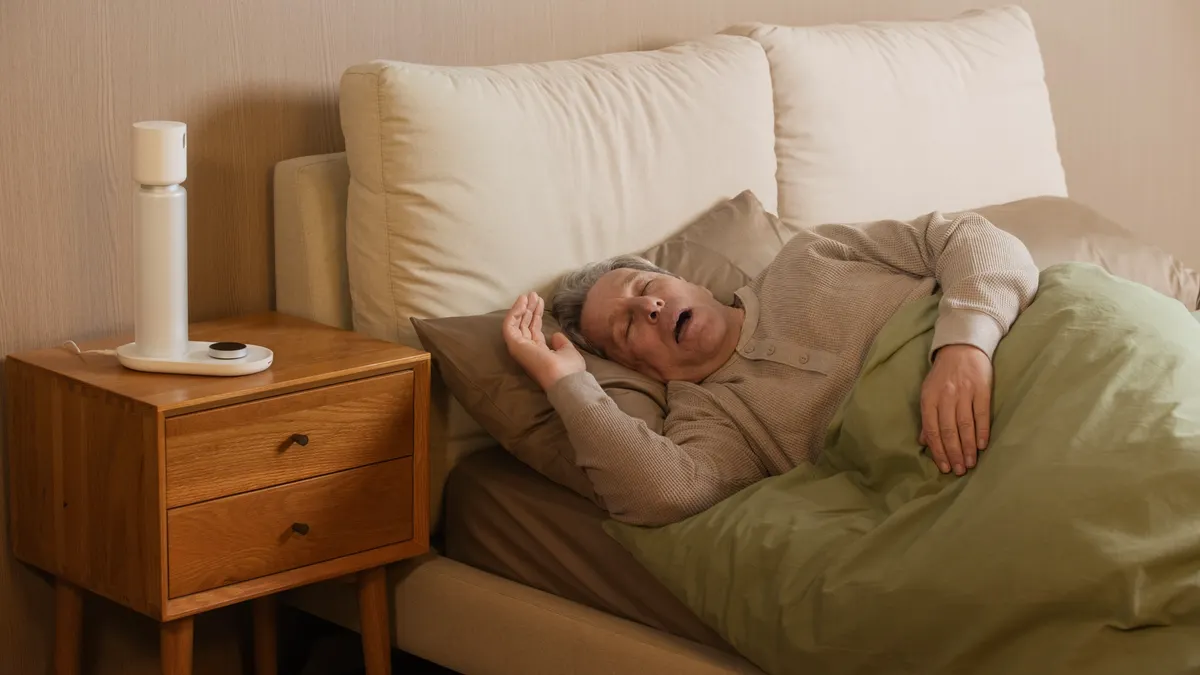
The shift is happening across several technical paths. Norwegian startup Somnofy has validated under-mattress radar for sleep staging. Withings has pursued mattress-embedded piezoelectric strips. Sleepal takes a different approach, combining radar, thermal and environmental sensing into a multi-sensor model rather than relying on a single signal source. What these approaches share is a single premise: moving data collection from the wrist to the environment so that insights are gathered passively rather than requested repeatedly.
Validation standards are rising alongside the hardware. A 1,022-night study across multiple independent facilities evaluated the Sleepal AI Lamp, a radar-based bedside device developed by XSmart. The system achieved 92.77% sleep-wake accuracy (Cohen's Kappa: 0.791, indicating substantial agreement beyond chance) and 77.2% four-stage classification (Kappa: 0.677), with a cohort deliberately including nearly 30% moderate-to-severe breathing disruption. The study was co-authored by Thomas Penzel, President of the World Sleep Society and is publicly available as arXiv preprint 2604.16442.
The transition from laboratory validation to real-world deployment is the next frontier. Bedroom environments introduce variables that controlled studies cannot fully replicate, including ambient noise, shifting furniture layouts and multiple occupants. The Sleepal dataset now exceeds 2,000 nights collected over 2.5 years, with the 1,022-night study serving as the independent validation lockbox. As units enter consumer bedrooms in June, that real-world expansion continues.
The broader wellness and digital health industry is beginning to treat pre-launch validation as infrastructure rather than marketing collateral. Building that evidence base before launch is slower and more expensive than the sector’s traditional path, but for contactless sensing to earn sustained trust and deliver the recovery insights these programs actually need, that rigor is becoming the price of entry.
For program managers, the shift is no longer theoretical. The question is whether the next initiative tracks who remembered to charge their ring or what actually happened during their sleep