Dive Brief:
- BD said Wednesday it has completed enrollment in a clinical trial of resorbable mesh for preventing incisional hernias after open abdominal surgery.
- Investigators enrolled 477 patients across 32 sites in the U.S. and Europe to compare the effect of BD’s Phasix mesh and primary suture closure on the rate of incisional hernias.
- BD will follow patients through the trial’s primary endpoint at 24 months, beyond which it expects to use the data to seek Food and Drug Administration authorization for the indication.
Dive Insight:
Incisional hernia is a serious and relatively common postoperative complication of elective abdominal surgeries where a large incision is made through the abdominal wall.
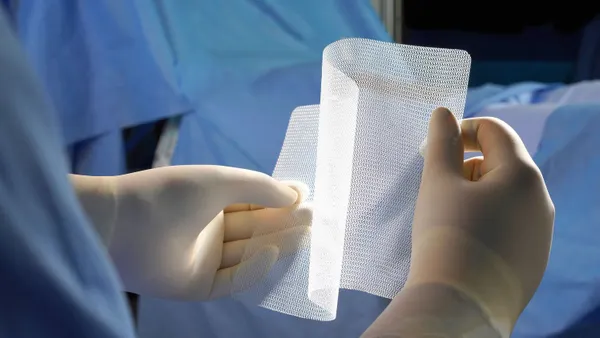
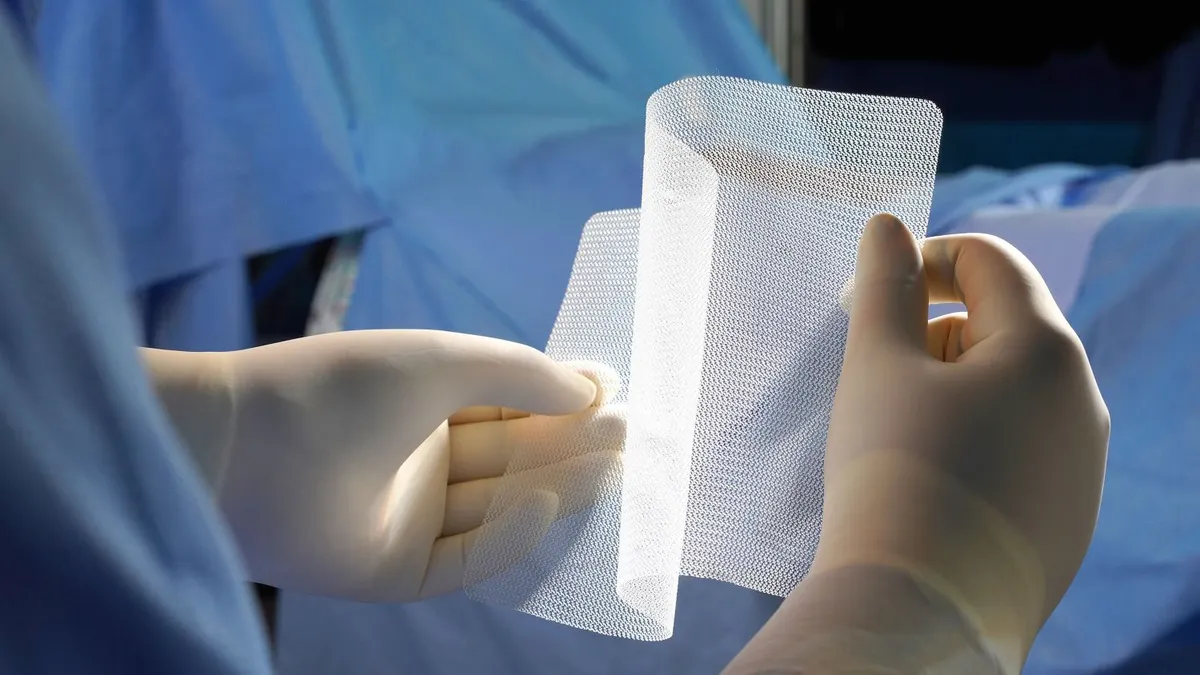
BD’s Phasix is a resorbable mesh. CR Bard, which BD bought for $24 billion in 2017, received FDA clearance in 2015 for Phasix in settings including hernia repair. Later, long-term data on the device confirmed the absence of mesh complications such as pain and infection. BD has faced lawsuits over adverse events allegedly linked to Bard meshes made from other materials.
By completing enrollment in its PREVENT trial, BD took a step toward expanding the Phasix label to cover the prophylactic use of the device in patients undergoing elective open midline laparotomy surgery.
Evaluating Phasix in hernia prevention builds on “decades of innovation in abdominal wall surgery” and will generate evidence that could “help broaden the role of regenerative technologies for patients at risk of post-surgical complications,” Rian Seger, worldwide president of surgery at BD, said in a statement.
BD called completion of enrollment in the clinical trial “a significant milestone in its advanced tissue regeneration strategy and expansion efforts.” Last week, the company reported double-digit growth in sales of its infection prevention and advanced tissue regeneration products in the third quarter of its financial year.
Discussing tissue regeneration on BD’s third-quarter earnings call, CEO Thomas Polen said the company expects “strong growth going forward.” Polen supported the expectations by highlighting clinical trials that the company is running to bring its biomaterial “into new indications to continue to expand our presence in those spaces.”