Abbott on Monday launched a new version of its Oncodetect molecular residual disease test designed to better monitor for traces of cancer in the body after treatment.
MRD tests look for tiny amounts of circulating tumor DNA, or ctDNA, in the blood to act as an early warning signal for cancer recurrence. The goal is to detect recurring disease earlier than traditional methods like imaging scans.
Abbott’s new test, based on technology developed at the Broad Institute of MIT and Harvard, uses whole-genome sequencing to track as many as 5,000 patient-specific cancer mutations, compared with up to 200 variants in the earlier Oncodetect test.
“You're seeing an evolution,” Dr. Rick Baehner, Abbott’s chief medical officer for precision oncology, said in an interview. “It's bringing together the advances in genomic science. It’s showing a major impact on clinical evidence, and there's incredible excitement in precision oncology that this is really going to help illuminate what was previously difficult to detect, and frankly, the Achilles' heel of MRD.”
Abbott acquired Oncodetect in its $21 billion acquisition of Exact Sciences, which closed in March.
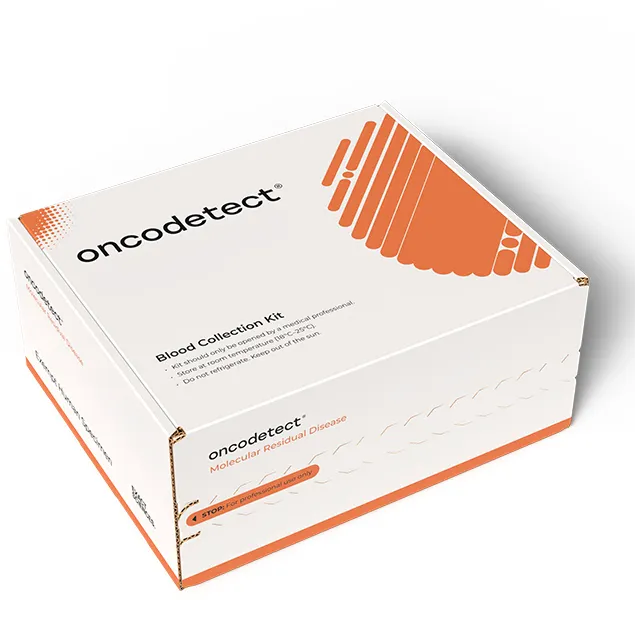
The new version of the test can find circulating tumor DNA levels below one part per million, compared with 15 to 50 parts per million in the old test, which relied on whole-exome sequencing, Baehner said.
“You're looking for that ct, or circulating tumor, DNA that's hiding — that needle in a haystack of the cell-free DNA that comes from white blood cells and cells that are undergoing normal apoptosis,” said Baehner. “We were able to find a tumor molecule at a sensitivity of less than 0.5 parts per million. So, in a background of over a million molecules of [cell-free DNA], we could see a tumor ctDNA molecule.”
Abbott said the ultrasensitive performance could help identify residual disease when ctDNA levels are especially low, such as in early-stage cancers and low-shedding cancers including prostate, lung, kidney and HR+ breast.
“It clinically matters to find ctDNA at this low level,” said Baehner. “It gives doctors much more confidence that if you call a patient negative, that patient really is at lower risk of having a cancer recurrence.”
Abbott is spearheading more than 20 ongoing studies that are evaluating the next-generation Oncodetect test across many different solid tumor types, Baehner said.
At the European Society for Medical Oncology meeting last week, the company presented data from the Beta-CORRECT study showing that in patients with colorectal cancer, there was a 30-percentage-point improvement in sensitivity for recurrence within two years with the new Oncodetect test versus the earlier test.
Colorectal cancer is a focus for Abbott, which gained the at-home screening test Cologuard in the Exact Sciences buyout. Last month, Abbott also announced the launch of Freenome’s SimpleScreen CRC blood-based test for colorectal cancer in the U.S. SimpleScreen is a screening option for people who decline to complete a colonoscopy or stool-based test.
Abbott’s cancer diagnostics portfolio also includes the Cancerguard multicancer detection test that screens one blood sample for multiple cancer types and the Oncotype DX genomic tumor tissue test for early-stage breast cancer that helps predict the likelihood of distant cancer recurrence and whether a patient is likely to benefit from the addition of chemotherapy to hormone therapy.
With Oncodetect, Abbott is competing with Natera’s Signatera MRD blood test.
Baehner said in the U.S. alone, there are more than 3 million potentially addressable patients, and market penetration is about 10%.
“Right now it’s early days,” he said. “There’s a lot of room for growth, and we’re just launching this new technology today.”