Dive Brief:
- Surgical robotics company MMI has received the Food and Drug Administration’s approval to expand an early feasibility study of microsurgery for Alzheimer’s disease.
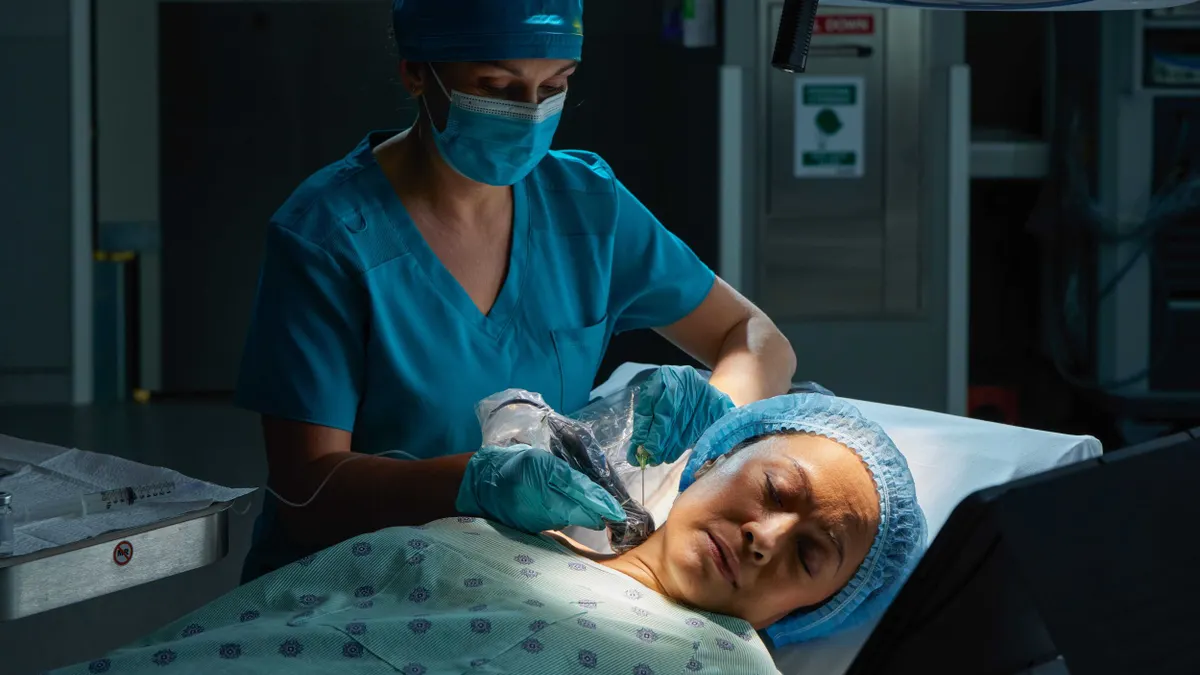
- The REMIND study is evaluating the safety and feasibility of using MMI’s Symani robotic system in microsurgery procedures to re-establish drainage pathways in the deep cervical lymph nodes of patients with neurodegenerative disease. Patients in the trial also have confirmed lymphatic abnormalities.
- The FDA gave MMI the go-ahead to expand the number of people who can enroll in the study to 15, from up to five in the initial group, the company said Thursday.
Dive Insight:
MMI is studying whether restoring drainage pathways in the deep cervical lymph nodes of the neck can help clear neurotoxins from the brain that researchers believe contribute to the progression of Alzheimer’s disease.
The FDA approved a supplement to its investigational device exemption for the first-of-a-kind study after reviewing 30-day safety data for the initial patients treated. Patients in the global, prospective study have mild to moderate Alzheimer’s disease.The first patient to undergo the procedure was treated at Baptist Health in Jacksonville, Florida. A larger pivotal trial is possible.
In a recent interview that delved into the robotic technology, MMI CEO Mark Toland told MedTech Dive that the Alzheimer’s procedure is “pushing the boundaries of medicine.” The hope is that restoring the drainage pathways through microsurgery can help clear harmful neurotoxins such as amyloid beta and phosphorylated tau.
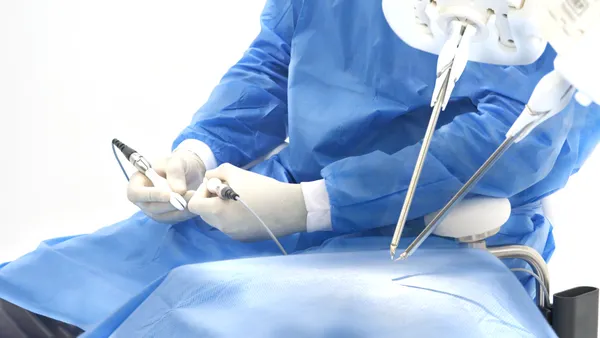
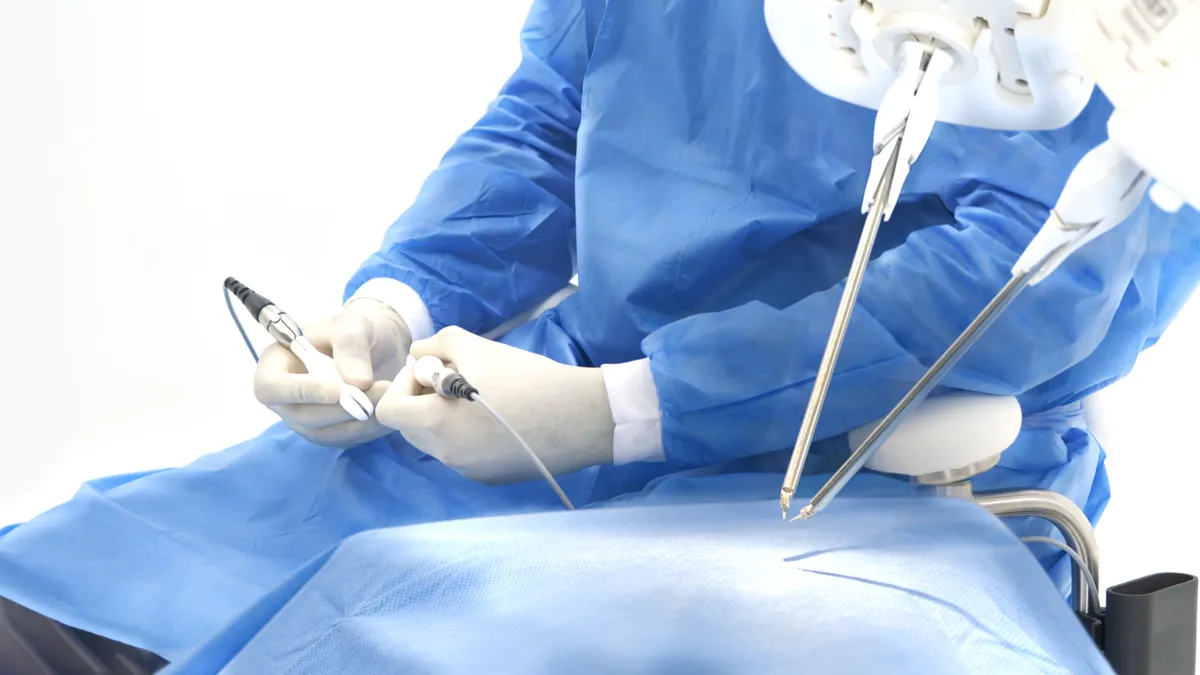
Symani is the only commercially available robotic system designed for microsurgery. The technique allows surgeons to reconnect and repair tiny structures such as blood and lymphatic vessels that can be under a millimeter in diameter.
The robot filters out tremors and translates the surgeon’s hand and wrist motions into scaled-down robotic movement of the system's miniaturized instruments.
Symani received de novo classification from the FDA for microsurgery in 2024. A subsequent clearance in 2025 expanded its capabilities to include soft tissue dissection.
The robot has also been used to perform skin, bone and tissue transplants, reconstructive head and neck procedures in cancer patients, cochlear implants, ophthalmic procedures, intracranial brain surgery, liver transplantation and spine tumor removal.
The REMIND trial is one of several studies that MMI is conducting to support expansion of robotic microsurgery into more applications.