Stryker is facing a slowdown in joint replacement procedures, which CEO Kevin Lobo attributed to a broader market deceleration.
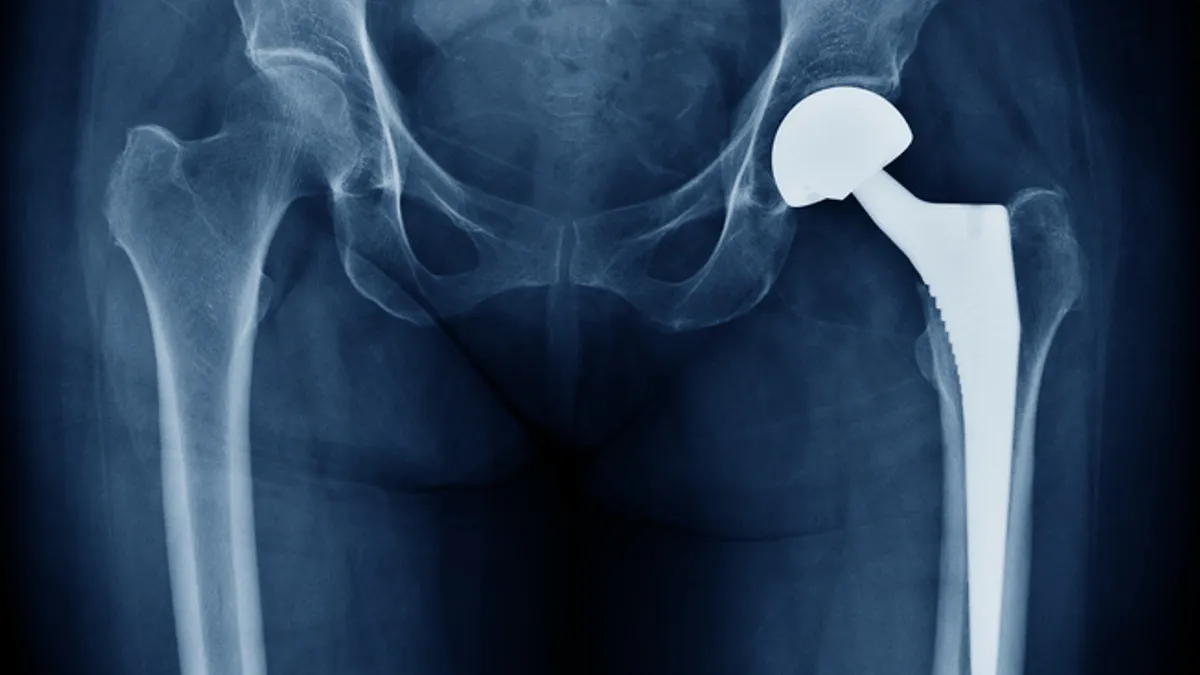
The company reported fewer hip and knee procedures in the third quarter than expected, with knee sales growing 1.1% in the quarter compared with the year-ago period and hip sales decreasing by 1%.
“Beginning with hips and knees, it is now clear that there is a market slowdown,” Lobo said in a Thursday earnings call. “In the U.S., we are seeing slower procedural growth amid affordability concerns from higher insurance premiums and deductibles.”
CFO Preston Wells first flagged the slower sales at an event last month. While Stryker has grappled with a cyberattack this year and a new software implementation within its orthopedics business, Lobo attributed the numbers to a slow market and economic challenges.
The company hasn’t lost business in hips and knees to the competition, Lobo said, but patients are delaying the procedures due to insurance costs and pre-authorization denials.
“There are patients that today are having trouble being able to make their deductible because their deductibles are higher,” Lobo said. “They’re actually living with pain a little bit longer than they would like to.”
He added that the market for joint replacement procedures has historically been tied to economic cycles.
Stryker lowered its sales guidance for 2026 to a range of 6.5% to 7.0%. The company previously forecast a range of 8.3% to 9.3%.
Lobo, who plans to step down as CEO at the end of the year, said he would “have preferred to deliver better news” in his last earnings call. Lobo has led Stryker for 15 years and will hand over the reins to Chief Operating Officer Spencer Stiles in January.
CMR Surgical partnership
Earlier this month, Stryker announced a $400 million investment into soft tissue robotics firm CMR Surgical. As part of the agreement, Stryker will become the exclusive U.S. distributor of CMR’s robot.
“Our hope and our plan is that we will eventually purchase this,” Lobo said, but he did not share a timeline.
When CMR came along with the upgraded version of its robot, called Versius Plus, “we got a chance to see something that we felt very excited about,” Lobo said. “We feel it is the best robot on the market to be able to succeed in multiple sites of care; the modular nature makes it great for the ambulatory surgery center as well as working well in hospitals.”
Lobo said Stryker decided to partner with CMR first rather than acquire the company outright, because an outright purchase carries a lot of risk and development costs. Stryker also wanted to ensure CMR’s robot is a commercial success in the U.S., a critical market.
Comparing CMR with Mako Surgical, which Stryker bought back in 2013 for its orthopedic surgical robots, Lobo said CMR is further along than when the company acquired Mako. However, Mako had implants attached to it, Lobo said, while CMR is a “pure adjacency, and it's not something we wanted to rush into necessarily.”