Orthopedics firm Zimmer Biomet raised its sales forecast for the year, despite reporting slower than expected sales of knee implants.
Following competitor Stryker’s earnings readout last week, where the company attributed lower than expected hip and knee sales to a broader slowdown stemming from affordability and insurance challenges, Zimmer’s results left analysts questioning the state of the orthopedics market.
The company reported knee sales of $767.5 million in the third quarter, a 3.1% decrease year over year. However, the company’s hip sales grew by 6% to $536.5 million.
CEO Ivan Tornos, on a Wednesday earnings call, rejected the idea of a market slowdown, noting that the company’s hip business grew in the quarter, and attributing the company’s performance in knees to commercial execution. Zimmer has been going through a salesforce transition, where the company is shifting to a fully dedicated salesforce. That process and a competitive knee implant market affected sales in the quarter, the CEO said.
Tornos also said procedures in ambulatory surgery centers are growing, and pricing and cancellation rates have been steady.
“We're not ready to call it a market slowdown,” Tornos said. “We’ve got work to do around commercial execution, and that's what we're going to focus on.”
Zimmer’s slowdown in knee volumes is impactful because the business represents 40% of overall sales, J.P. Morgan analyst Robbie Marcus wrote in a research note on Wednesday.
Despite Tornos’ denial of a broader slowdown, Marcus wrote, “considering weakness across almost all of the major players in knees, we think it's more market related.”
Zimmer raised its revenue growth guidance for 2026 to a range of 4.4% to 4.9%, from a range of 3.9% to 4.9%.
Monogram update
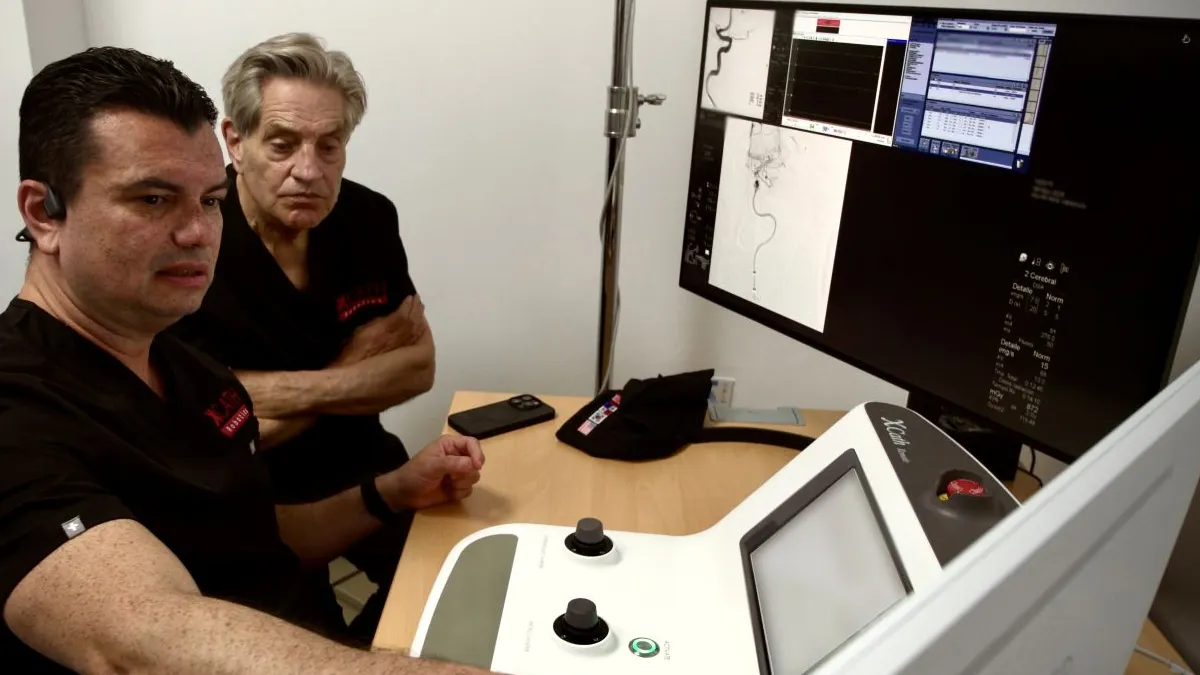
Zimmer plans to file an application with the Food and Drug Administration for a new surgical robot, following the company’s acquisition of Monogram Technologies last year. Monogram’s robot is currently cleared for total knee replacement surgeries, and Zimmer expects to be able to launch a fully autonomous version in the first half of 2027.
Tornos expects the system to be a “major catalyst” for the company, adding that it will bring in more surgeons who currently do not use a robot.
In a clinical trial, Tornos said the robot did not see any patient safety reports and demonstrated improvements in accuracy. He also claims the robot is efficient and easy to use.